LPG behaves differently depending on temperature, and the difference is large enough to affect safety, performance and customer satisfaction. A cylinder that performs perfectly in a mild climate can struggle in a desert summer or a northern winter. For manufacturers and distributors serving multiple regions, understanding these effects is essential.
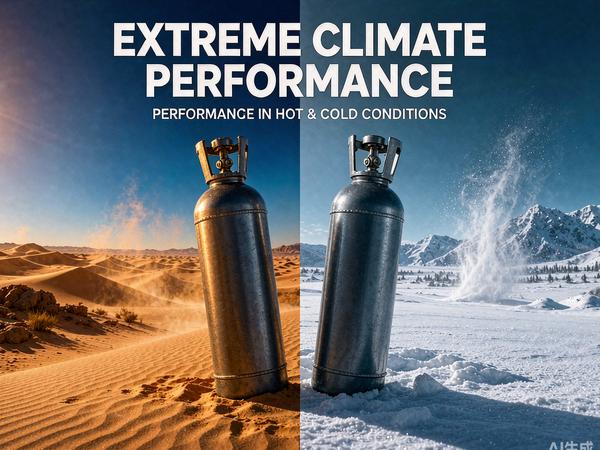
The physics is straightforward. LPG is stored as a liquid under pressure. As temperature rises, vapour pressure increases. As temperature falls, pressure drops and the liquid vaporises more slowly. Everything that follows — from filling to appliance performance — is shaped by this relationship.
Hot Climates: Managing Pressure
In very hot environments, cylinder pressure can rise significantly. A cylinder left in direct sunlight or inside a hot vehicle can reach temperatures well above ambient. This is why filling limits exist and why they must be respected.
Overfilling is the real danger. LPG expands rapidly with temperature, and a cylinder filled beyond its permitted level can become liquid-full, leaving no space for expansion. Pressure then rises sharply, potentially activating the relief valve or worse.
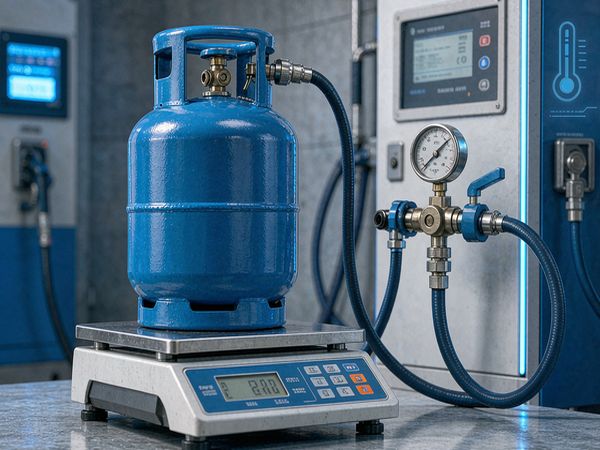
This is why fill limits are expressed by weight or by filling ratio, and why they are stricter in hot climates. Filling plants in hot regions should adjust procedures during the hottest months and never rely on a gauge alone.
Storage matters too. Cylinders should be kept in ventilated, shaded areas away from heat sources. In many hot markets, simple shade structures at depots make a measurable difference to safety and cylinder life.
Hot climates also accelerate corrosion and degrade coatings faster, particularly where humidity and salt are present. That makes coating specification and inspection intervals more important.
Cold Climates: The Vaporisation Problem
Cold weather creates the opposite issue. As temperature falls, LPG vaporises more slowly and pressure drops. A cylinder that is nearly empty in cold conditions may not deliver enough gas to run an appliance properly, even though liquid remains inside.
This is a frequent source of customer complaints in winter. The cylinder is not broken; it simply cannot vaporise fast enough to meet demand. Larger cylinders perform better because they have more liquid surface area and more thermal mass.
Practical responses include keeping cylinders in a warmer environment where safe, using the correct cylinder size for the load, and avoiding high-demand draws from a small bottle in very low temperatures. In some applications, vapourisers or cylinder warmers are used, but these require proper equipment and approval.
Cold weather also affects materials. Some steels become more brittle at low temperatures, which is why material selection and testing matter for cylinders used in cold regions. Standards often require impact testing at low temperatures for this reason.
Condensation and Corrosion
Both climates create corrosion risks, but in different ways. Hot humid regions promote continuous moisture and salt attack. Cold regions create condensation as cylinders move between warm and cold environments, and road de-icing salts accelerate external corrosion.
The base of the cylinder is the most vulnerable area in both cases because moisture collects there. Coating quality, drainage and storage practice matter more than most buyers realise.
What Manufacturers Should Do
Design and specification should reflect the destination climate. That may mean different coating systems, different steel specifications for cold regions, and valve or relief settings appropriate to the operating temperature range.
Testing should also reflect real conditions. Where possible, evaluate cylinders under representative temperatures and confirm that pressure relief devices operate correctly across the expected range.
Clear labelling and documentation help customers use cylinders correctly. Guidance on filling limits in hot weather and performance expectations in cold weather prevents many complaints.
What Distributors Should Do
Train filling staff to adjust fill limits in hot weather. Provide shaded storage. Educate customers about cold-weather performance so they understand why a nearly empty bottle may struggle. Recommend appropriate cylinder sizes for the climate and load.
Track corrosion patterns by region. If cylinders in a particular area fail earlier, investigate whether climate, storage or handling is the cause.
Quick Takeaways
- Temperature strongly affects LPG pressure and vaporisation.
- Hot climates demand strict fill limits and shaded storage.
- Cold climates reduce vaporisation, causing weak appliance performance.
- Base corrosion is a risk in both hot and cold environments.
- Specify and train according to the destination climate.
Frequently Asked Questions
Why does my gas bottle perform poorly in winter?
Low temperatures slow vaporisation. The cylinder may still contain liquid but cannot deliver enough gas for high demand.
Can a cylinder be left in the sun?
It should be avoided. Heat raises pressure and accelerates coating degradation.
Do fill limits change with temperature?
Yes. Many regulations require reduced fills in hot conditions to allow for expansion.
Are different steels needed for cold regions?
Often yes. Material toughness at low temperature is a real requirement in cold climates.
The bottom line: climate is not a background detail. It shapes how a cylinder performs, how safely it can be filled and how long it lasts — and the smart supply chain plans for it.