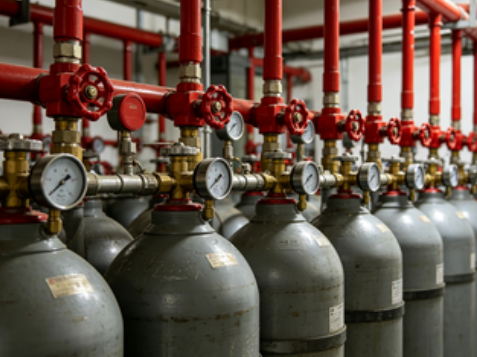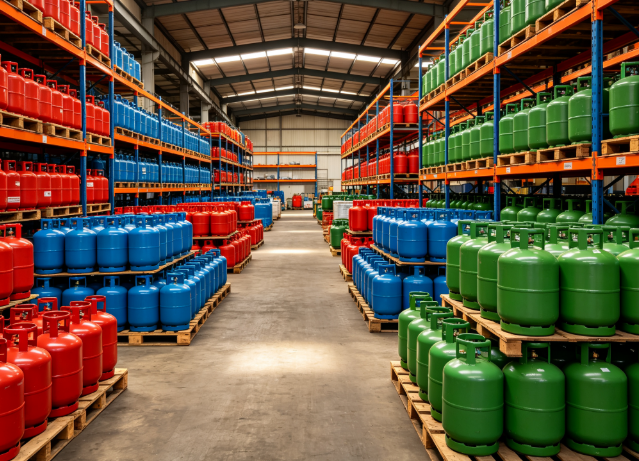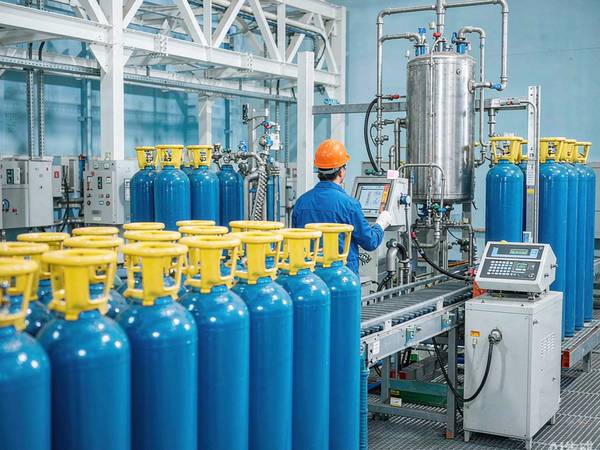
A refill station looks simple from the outside: a stack of cylinders, a filling scale, a counter. But behind that simple picture is a business with tight margins, significant safety obligations and a constant balancing act between throughput, working capital and customer service. Understanding the economics explains why some refill operations thrive while others struggle.
For anyone considering entering the market — or supplying into it — the numbers behind a refill station are worth understanding. Cylinder demand may be strong, but profitability depends on operational discipline.
Where the Money Comes From
A refill station earns money in three main ways: the margin on gas sold, fees for cylinder hire or deposit, and sometimes the sale of related products such as regulators, hoses and appliances.
The gas margin is usually the largest revenue source but often the thinnest. In many markets, LPG pricing is competitive and regulated, leaving limited room to differentiate. That means the real profit lever is often volume and efficiency rather than price.
Cylinder deposits and rental create a second, more stable income stream. A customer who holds a cylinder on deposit has a financial reason to return it. This supports asset recovery and generates working capital.
Accessories and services provide higher margins. A customer buying a regulator or replacing a hose is paying for convenience and safety, and that sale does not carry the same price pressure as gas.
The Cost Structure
The main costs are gas purchase, cylinder capital, plant and equipment, labour, transport, compliance and losses.
Cylinder capital is significant. A fleet of thousands of cylinders represents a large investment, and cylinders that are lost, stolen or scrapped early directly damage returns. This is why asset tracking and deposit management matter so much.
Transport is often the largest operating cost after gas. Delivery vehicles, fuel, drivers and route time all add up. A station that improves route density can improve profitability without changing prices.
Compliance costs — testing, inspections, training, licensing — are unavoidable. They should be treated as part of the cost of doing business, not as optional overhead.
Losses are the quiet killer. Cylinders that leave the system, gas given away through inaccurate filling, and downtime from equipment failure all erode margin.
The Throughput Equation
Profitability is closely tied to throughput. A filling plant has fixed costs — rent, equipment, staff — that must be covered regardless of volume. The more cylinders it fills per day, the lower the cost per fill.
This is why busy stations invest in faster filling systems, better layout and efficient cylinder handling. It is also why queuing is so damaging: customers wait, staff rush, and the station loses volume to competitors.
Improving throughput does not require major investment every time. Better scheduling, pre-sorted cylinders, adequate spare stock and streamlined paperwork can make a meaningful difference.
Working Capital and Cash Flow
A refill business is cash-intensive. Gas and cylinders must be paid for before revenue is collected, and deposits create obligations that must be managed carefully.
Seasonal demand complicates this. Before a busy season, a station must build inventory, tying up cash. Poor cash management can sink an otherwise profitable operation.
Operators should monitor cylinder turnover, deposit balances and receivable days closely. A station that grows too quickly without managing working capital can run into trouble even when demand is strong.
The Role of Cylinder Quality
Cylinder quality has a direct economic impact. Cylinders that fail early must be replaced, adding capital cost. Cylinders that require frequent repair consume labour. Cylinders with poor valves generate leaks and complaints.
A slightly higher purchase price for a durable, well-coated, well-valved cylinder often produces a better return over its service life. Buyers who focus only on unit price are usually optimising the wrong number.
This is where a clear lifecycle view helps. Calculate cost per fill over the expected service life, including maintenance and loss, rather than looking only at acquisition cost.
Technology and Efficiency
Digital tools are changing refill economics. Cylinder tracking reduces losses, digital records simplify compliance, and route planning software improves delivery efficiency. Filling systems with better accuracy reduce giveaway and improve consistency.
The best investments are those that reduce a recurring cost. A tracking system that saves a modest percentage of cylinder losses each year can pay for itself quickly. A filling scale that reduces gas giveaway does the same.
Customer Service as a Competitive Advantage
In most refill markets, customers have choices. The station that offers shorter waits, reliable supply, clean cylinders and helpful service will win repeat business even if prices are similar.
Small details matter: a clean cylinder, a functioning valve, a polite driver and a fair deposit policy. These are cheap to deliver and powerful to maintain.
Quick Takeaways
- Refill stations earn from gas margin, deposits and accessories.
- Gas margins are thin, so volume and efficiency drive profit.
- Cylinder loss and transport are major cost drivers.
- Cylinder quality affects lifecycle cost, not just purchase price.
- Digital tracking and accurate filling deliver measurable returns.
Frequently Asked Questions
What is the biggest cost in a refill business?
Usually gas purchase and transport, with cylinder capital and losses also significant.
How can a station improve profitability without raising prices?
Increase throughput, reduce cylinder loss, improve route efficiency and reduce gas giveaway.
Are deposits important?
Yes. They support asset recovery and provide working capital, so the level must be set carefully.
Is cheaper equipment a good way to save money?
Not always. Inaccurate or unreliable equipment creates ongoing losses that exceed the initial saving.
The bottom line: a refill station is an efficiency business. The operators who treat cylinders as assets, track them carefully and run tight operations are the ones who make the economics work.