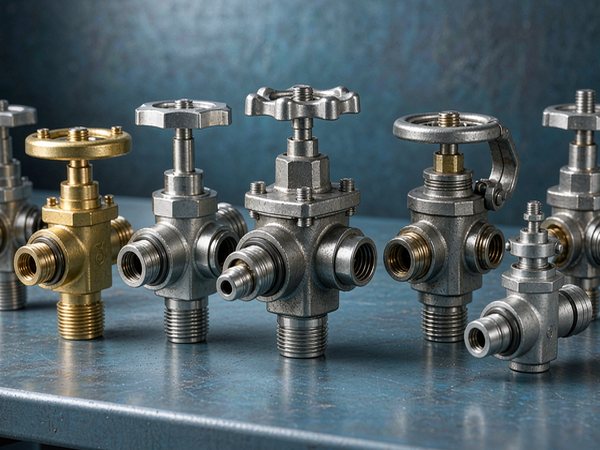
Choosing among cylinder valve types is one of the most consequential decisions in LPG sourcing: a POL valve suits larger industrial and bulk cylinders, a QCC valve is standard on small propane barbecue cylinders, an ACME thread appears on many filling and regulator connections, and the wrong propane valve connection can make an otherwise perfect cylinder unusable in your market.
A cylinder may be perfectly manufactured, correctly tested and beautifully coated, but if the valve does not match the regulator and the filling equipment at its destination, it is a failed purchase. This guide explains the main valve standards, where each is used and how to specify correctly.
Why the Valve Matters More Than the Bottle
The valve is the single point where the cylinder, the regulator, the filling plant and the end user all meet. It controls flow, prevents leakage and provides the last line of defence in the event of a fire or excess flow. It is also the component most likely to be Interchangeable only within a standard — not across standards.
Buyers often focus on the shell: steel grade, wall thickness, test pressure. Those matter, but a mismatch at the valve stops the product at customs, at the filling station or at the customer’s regulator. In practice, valve errors are among the most common causes of rejected cylinder shipments.
The main differences between valve types come down to three things: thread form, sealing method and safety features. Understanding these three variables is enough to avoid almost every compatibility problem.
The POL Valve: The Industrial Workhorse
The POL valve is one of the oldest and most widely used LPG valve standards in the world. It uses a 0.885-inch left-hand thread — the left-hand direction is deliberate, to prevent accidental connection to the wrong gas service — and seals with a metal-to-metal shoulder or a soft seat depending on the design.
POL valves are common on larger cylinders: 30lb, 40lb, 100lb and industrial bottles. They are also widely used across Asia, the Middle East and Latin America on household and commercial LPG cylinders. Their advantages are robustness, high flow capacity and broad availability of spare parts.
The limitation is that a POL connection requires a wrench or handwheel to tighten and does not inherently prevent overfilling. Where regulations require overfill protection, a POL valve must be paired with a separate OPD device or replaced with a different standard.
The QCC Valve: Consumer Convenience and Safety
The QCC valve — originally the “quick connecting coupling” developed for the North American barbecue market — is instantly recognizable by its large handwheel and integrated safety features. It uses a right-hand ACME thread and is designed to connect without tools.
QCC valves are the standard on 20lb propane cylinders used for grills, patio heaters and small recreational applications. Most modern QCC valves include an OPD (overfill prevention device) that stops filling when the cylinder reaches approximately 80 percent of water capacity. Many also include a thermal shutoff that closes flow if the cylinder is exposed to extreme heat.
These features make QCC valves unusually safe for consumer use, but they also make them unsuitable for applications that need high flow rates or continuous industrial supply. They are also largely specific to North America; a QCC cylinder exported elsewhere may need a different outlet.
ACME Thread: The Connection Behind Many Valves
ACME thread is not a valve type in itself but a thread form used in many LPG connections. It is a trapezoidal thread with a flat crest and root, designed to carry load and seal reliably under repeated connection and disconnection.
Both QCC valves and many filling connections use ACME threads. However, ACME threads come in different diameters and pitches — a 0.305-inch ACME on a small appliance cylinder is not the same as the larger ACME used on a bulk filling hose. Assuming that “ACME fits ACME” is a common and expensive mistake.
When specifying a cylinder, always state the exact thread designation, including diameter and number of threads per inch, rather than simply naming the thread family.
Other Valve Standards to Know
Beyond POL, QCC and ACME, several regional standards matter:
- DIN valves: common in Europe, typically with a left-hand thread and a specific sealing arrangement.
- BS valves: used in the UK and some Commonwealth markets, with their own thread and seat geometry.
- JIS valves: specified in Japan and parts of East Asia.
- CGA connections: the broader North American system that covers POL, QCC and numerous specialty gases.
For exporters, the practical question is not which valve is “best” but which is required at the destination. A cylinder fitted with the wrong valve may be impossible to fill legally, regardless of its certification.
Qingdao Evergreen Import and Export Co., Ltd. supplies cylinders with a wide range of valve configurations, and one of the most frequent requests we receive is to match a valve to a customer’s existing regulator fleet. Getting this right at the specification stage avoids costly retrofitting later.
How to Specify the Correct Valve
A robust specification should include:
- The exact valve standard and designation.
- Thread form, diameter and direction.
- Sealing method.
- Whether OPD or excess-flow protection is required.
- The intended gas service and maximum flow rate.
- The regulator and filling equipment used at the destination.
- Applicable certification for the valve itself.
The last point deserves emphasis. In many markets, the valve must carry its own approval, separate from the cylinder’s pressure-vessel certification. A cylinder may be certified while its valve is not, which can still block import.
Common Mistakes and How to Avoid Them
The first mistake is assuming that visual similarity means compatibility. Two valves can look almost identical and differ in thread direction, pitch or seat geometry.
The second is ordering cylinders and regulators from different suppliers without confirming the interface. Even if both are “standard”, standards vary by country.
The third is ignoring future service. A valve that is hard to source locally creates maintenance problems for the entire service life of the cylinder. Check that spare valves, seats and O-rings are available in the destination market.
The fourth is overlooking the filling connection. A cylinder may reach the customer and still be impossible to fill if the plant uses a different coupling. Confirm the filling interface, not just the end-user regulator.
Safety Implications
Valve selection is a safety decision, not a logistics detail. The correct valve provides a leak-tight seal, controls flow under all operating conditions and closes automatically in abnormal situations.
A mismatched valve can leak, strip threads or fail to seal under pressure. In a confined space, even a small leak can create a dangerous atmosphere. This is why regulations in most countries specify approved valve types for specific cylinder sizes and services.
Never adapt a cylinder with an unauthorized adapter or thread converter. Where a different connection is genuinely needed, use an approved regulator or valve assembly from a certified supplier.
Quick Takeaways
- The valve determines whether a cylinder can actually be filled and used in a given market.
- POL valves are robust, high-flow and common on larger industrial cylinders.
- QCC valves are tool-free, consumer-oriented and often include OPD and thermal shutoff.
- ACME is a thread family, not a single standard — diameter and pitch matter.
- Always specify the valve standard, thread, safety features and local certification.
Frequently Asked Questions
Can I change the valve on a cylinder myself?
No. Valve replacement must be performed by an approved facility using certified parts, followed by inspection and testing.
Is a POL valve better than a QCC valve?
Neither is universally better. They serve different cylinder sizes, markets and applications.
Does OPD come standard on all valves?
No. OPD is required on certain consumer propane cylinders in some markets, but many industrial valves do not include it.
Why is the POL thread left-handed?
To prevent accidental connection to an incompatible gas service, which is a long-standing safety convention.
| About Qingdao Evergreen Import and Export Co., Ltd. Qingdao Evergreen Import and Export Co., Ltd. manufactures and exports LPG cylinders, valves and gas fittings to markets worldwide, supporting buyers with region-specific specifications, certification and reliable supply. |
The bottom line: specify the valve for the market, not just the cylinder — the connection decides whether the product works.