A cylinder’s colour is a useful first signal, but reliable cylinder identification depends on the gas cylinder marking and the colour code required in the destination market — not just the cylinder paint.
The short answer is that colour is a useful clue but an unreliable rule. Conventions vary by country, by gas type and by brand, and some markets regulate colour strictly while others barely regulate it at all. For buyers and users, the safe approach is to treat colour as a secondary signal and the marking as the primary one.
Why Colour Exists at All
Colour serves several practical purposes. It helps identify the gas inside at a glance, which matters in a depot where many gas types are stored together. It supports brand recognition in competitive consumer markets. It can signal ownership in exchange systems where cylinders circulate between customers. And in some cases it is a legal requirement tied to safety.
But colour is also vulnerable. Cylinders get repainted, repainted incorrectly, or repainted deliberately to disguise their origin. A cylinder’s colour can be changed in an afternoon; its stamped marking cannot.
Common Conventions by Region
Patterns exist, but none is universal:
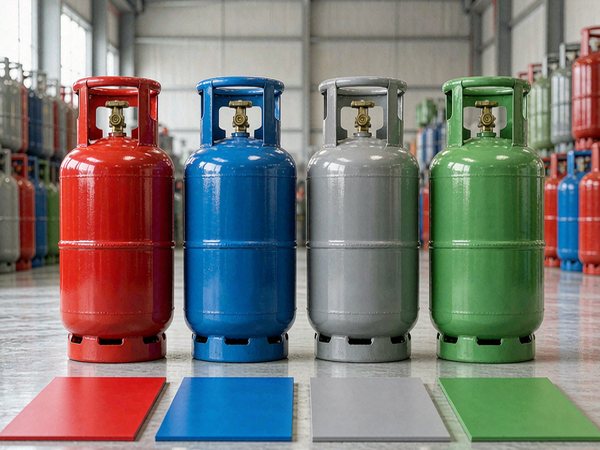
- In many European countries, LPG cylinders are commonly red, though Green and grey are also used by specific suppliers.
- In the UK, different suppliers historically used distinct colours such as red, green or grey as brand identifiers.
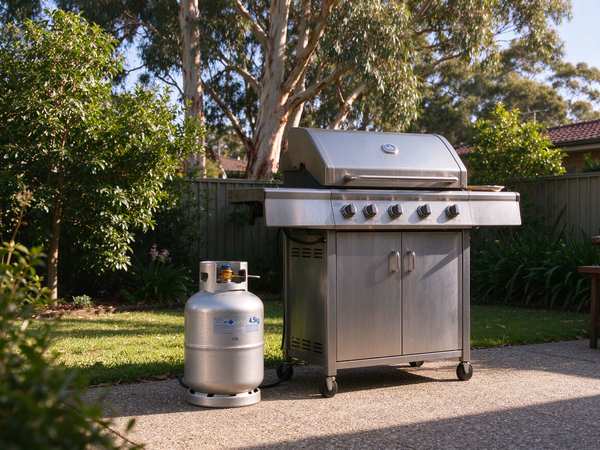
- In North America, propane cylinders are frequently silver or grey, though many manufacturers use branded colours such as blue or yellow.
- Across Asia, LPG cooking cylinders are often blue, red or silver depending on the country and distributor.
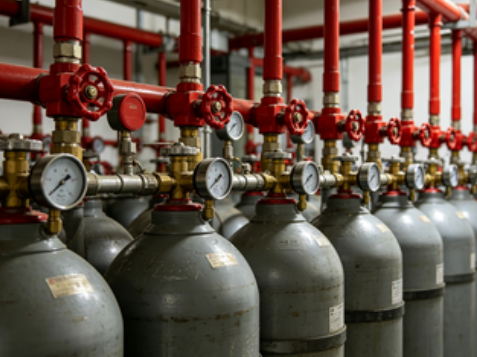
- Industrial gases use their own systems: oxygen cylinders are commonly green or black in some regions and white in others, while acetylene cylinders are often maroon or red.
The overlap is the problem. Red may mean LPG in one market and a different gas in another. Colour alone is never enough to identify contents.
What Regulators Actually Require
Requirements fall into three broad groups:
- Strict systems where colour is mandated by standard for a specific gas.
- Systems where colour is not mandated but must not contradict the marking.
- Consumer markets where colour is mainly a branding choice with limited regulation.
Many standards require that the gas name or chemical symbol be marked on the cylinder regardless of colour. Some also require specific label designs, hazard diamonds or colour bands. An exporter must check the destination market’s rules rather than assume that a colour accepted at home will pass abroad.
This is a frequent source of rejected shipments. A cylinder can meet every pressure and material requirement and still fail because its colour or label does not match local rules.
Colour in Exchange and Rental Systems
Where cylinders are exchanged or rented, colour becomes an asset-management tool. A distinctive colour helps distributors identify their own bottles, detect losses and spot unauthorized repainting.
That is why some markets have highly visible brand colours. In these systems, a cylinder repainted in another colour is not just a cosmetic issue — it may indicate theft or unauthorised refilling. Traceability and colour work together.
Qingdao Evergreen Import and Export Co., Ltd. produces cylinders for exchange systems in several markets, and we regularly work with customers who specify exact colour and marking schemes. Consistency matters because a fleet of thousands of identical, clearly marked cylinders is far easier to manage than a mixed one.
The Repainting Question
Repainting is sometimes necessary, but it must be done correctly. Key points:
- Only repaint if the cylinder is structurally sound and approved for continued service.
- Remove loose paint, rust and contamination before recoating.
- Use a coating compatible with the original system.
- Preserve or restore all required markings.
- Never repaint to conceal damage, unauthorised modifications or a failed test.
Repainting over a illegible or altered marking is a serious problem because it breaks the traceability chain. Inspectors and filling operators rely on that marking.
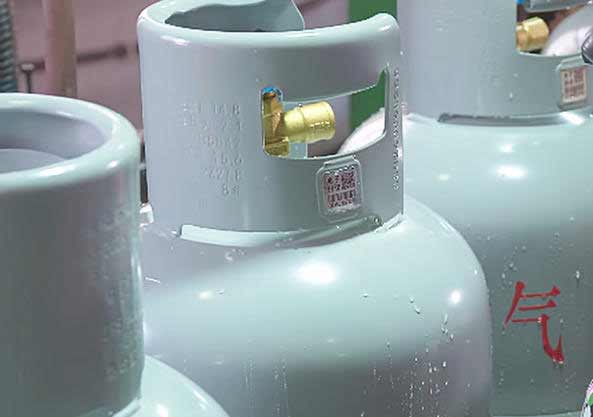
More important than colour is the stamping on the collar or shoulder. It normally includes the manufacturer’s mark, serial or batch number, test pressure, test date, tare weight and the standard to which the cylinder was made.
Users should be trained to read the marking, not the colour. In a busy filling plant, a operator who checks the stamp takes seconds and prevents errors that could have serious consequences.
Practical Guidance for Buyers
When ordering cylinders:
- Confirm the colour requirements of the destination market in writing.
- Check whether colour bands or labels are required in addition to body colour.
- Ensure all mandatory markings remain clearly visible after coating.
- Specify a durable, UV-resistant coating if cylinders will be stored outdoors.
- Request a sample with the exact final colour and labelling before mass production.
Colour specification is a small line on a purchase order with a surprisingly large impact on acceptance.
Quick Takeaways
- Colour conventions vary widely by country and gas type.
- Red, blue, green and grey all have different meanings in different markets.
- Markings, not colour, are the authoritative source of identification.
- Repainting must preserve required markings and never conceal damage.
- Confirm colour and label rules for the destination market before ordering.
Frequently Asked Questions
Does red always mean LPG?
No. Red is common for LPG in some markets but is used for other gases elsewhere. Always read the marking.
Can I choose any colour for my cylinders?
Only if the destination market allows it. Some standards mandate specific colours or prohibit ones associated with other gases.
What should I do if a cylinder’s colour has been changed?
Verify the stamped marking and test status. If the marking is missing or altered, the cylinder should be taken out of service.
Does colour affect certification?
It can, if the market has colour requirements. Non-compliant colour can cause a shipment to be rejected.
| About Qingdao Evergreen Import and Export Co., Ltd. Qingdao Evergreen Import and Export Co., Ltd. manufactures and exports LPG cylinders, valves and gas fittings to markets worldwide, supporting buyers with region-specific specifications, certification and reliable supply. |
The bottom line: colour catches the eye, but the marking is what keeps people safe.