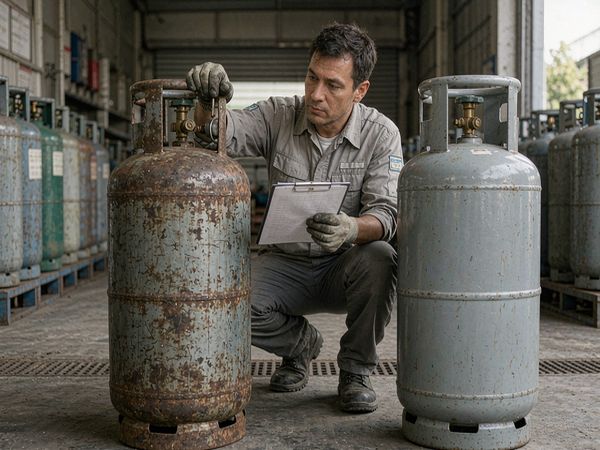

Choosing an LPG cylinder supplier means looking beyond the quote: a credible cylinder manufacturer should provide cylinder certification, transparent wholesale LPG cylinders pricing, and open access to the gas cylinder factory.
The difficulty is that most suppliers look excellent on a website. Distinguishing real capability from polished presentation requires a structured approach. Here is how experienced buyers do it.
Start With the Non-Negotiables
Before comparing prices, establish what must be true:
- The factory holds the certifications required for your market.
- It can produce the exact cylinder specification you need.
- It has a documented quality-control process.
- It can provide traceability from raw material to finished batch.
- It has a track record of exporting to your region.
If any of these is missing, the price is irrelevant. A cheaper cylinder that fails inspection or cannot be legally filled is not a saving.
Green Flags Worth Looking For
Strong suppliers tend to volunteer information rather than wait to be asked. Positive signals include:
- Detailed answers about steel grade, wall thickness and forming process.
- A clear description of welding and inspection procedures.
- Willingness to share test reports and certificates for recent batches.
- A named contact responsible for technical questions.
- Transparent factory audits, either in person or by video.
- References from customers in comparable markets.
A supplier who invites scrutiny is usually confident in their process. Qingdao Evergreen Import and Export Co., Ltd. routinely welcomes buyers who want to examine production lines, test records and documentation — because a serious buyer’s questions are a chance to demonstrate real capability.
Red Flags That Should Stop the Process
Certain warning signs are consistent across industries:
- Unwillingness to provide certificates or test reports.
- Prices far below the market without a clear explanation.
- Vague answers about steel source or production methods.
- No documented inspection or traceability system.
- Pressure to place an order before completing due diligence.
- Inconsistent documentation, such as certificates that do not match batch numbers.
A low price is not automatically a red flag — some suppliers genuinely have cost advantages. But a low price combined with opacity almost always is.
The Questions to Ask
Good due diligence is mostly about asking the right questions. A short list:
- What steel grade do you use, and can you provide mill certificates?
- How is the cylinder formed and welded?
- What non-destructive testing is performed on welds?
- What is your hydrostatic test procedure and test pressure?
- How do you control wall thickness?
- What coating system do you use, and how is preparation handled?
- How are cylinders marked and traced?
- Which valves do you fit, and are they certified?
- Can you provide recent batch documentation as a sample?
- What is your experience with my destination market’s regulations?
The quality of the answers matters more than the confidence with which they are given. A supplier who says “we need to check and get back to you” is often more trustworthy than one who invents an immediate answer.
Verify, Don’t Just Trust
Documents can be checked. Certificates should be verifiable with the issuing body where possible. Batch numbers on sample cylinders should match the accompanying paperwork. Test reports should be recent and refer to the exact specification being supplied.
If the order is substantial, an on-site audit is worth the cost. What to look for:
- Clean, organized production areas.
- Calibrated equipment with visible maintenance records.
- Clear work instructions at each station.
- Traceable material storage.
- A functioning inspection station with recorded results.
A factory that is tidy and documented in the areas buyers normally see, but disorganized elsewhere, deserves closer scrutiny.
Sample Testing
Before a large order, request samples from a recent production batch — not a showroom piece. Have them independently inspected if the order justifies it. Check dimensions, weight, marking, coating quality and valve fit. If possible, run a simple comparison against a competitor’s sample.
Sample testing catches problems that paperwork cannot, especially around finishing, marking accuracy and valve compatibility.
Evaluate Communication
This is underestimated. A supplier who responds slowly, loses documents or gives inconsistent answers before the order will not improve after it. Clear, prompt, technical communication is a reliable indicator of how problems will be handled later.
Ask a deliberately technical question early. The speed and precision of the response tells you a great deal about whether the supplier has real technical depth or is simply a trading intermediary.
The Total Cost Picture
The cheapest quote is rarely the cheapest outcome. Factor in:
- Rejection and rework costs.
- Shipping delays and their downstream impact.
- Inspection and compliance failures.
- Warranty claims and customer complaints.
- The cost of switching suppliers later.
A slightly higher unit price from a reliable, certified supplier frequently produces a lower total cost over a contract.
Quick Takeaways
- Establish certifications and specification fit before discussing price.
- Strong suppliers volunteer technical detail and welcome audits.
- Opacity combined with a low price is the clearest warning sign.
- Verify documents and test samples from real production batches.
- Communication quality before the order predicts problem-solving after it.
Frequently Asked Questions
What certificate should a cylinder supplier have?
It depends on the market: DOT or TC in North America, EN/CE in Europe, AS 2469 in Australia, SNI in Indonesia and local approvals elsewhere.
How can I verify a certificate?
Contact the issuing authority or accreditation body directly, and check that batch or model numbers match the documentation.
Is a factory audit necessary?
For large or long-term contracts, yes. For smaller orders, a detailed video audit plus independent sample inspection is a reasonable alternative.
Why not just choose the lowest price?
Because quality failures, compliance issues and delays usually cost far more than the initial saving.
| About Qingdao Evergreen Import and Export Co., Ltd. Qingdao Evergreen Import and Export Co., Ltd. manufactures and exports LPG cylinders, valves and gas fittings to markets worldwide, supporting buyers with region-specific specifications, certification and reliable supply. |
The bottom line: supplier vetting is not bureaucracy — it is the cheapest insurance you can buy against a very expensive mistake.