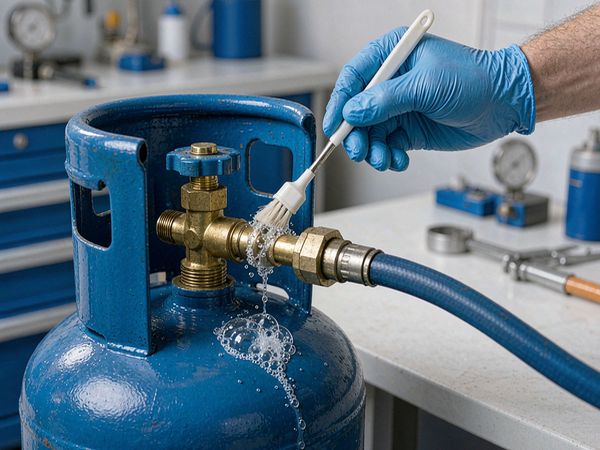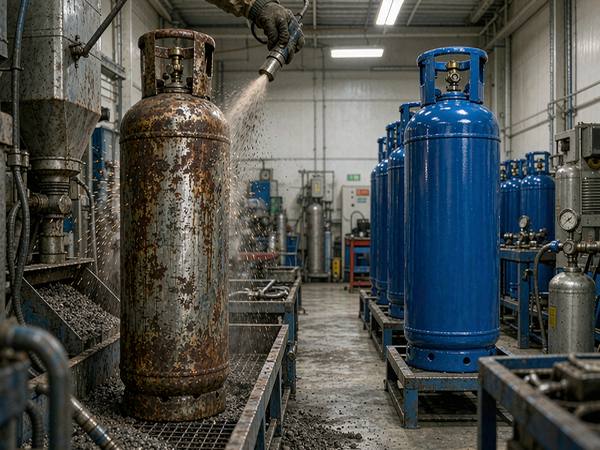
Proper cylinder reconditioning is a controlled industrial process, not a quick coat of paint: LPG cylinder restoration begins with inspection and rejection of unsafe bottles, cylinder shot blasting removes old coating and corrosion, and a refurbished gas cylinder only returns to service after testing, while the cylinder repainting process restores protection and identification.
Done correctly, reconditioning extends service life, reduces waste and saves money. Done badly, it produces a dangerous cylinder that looks new but hides structural problems underneath.
Why Reconditioning Exists
Cylinders are durable assets designed for many years of service. Their shells often outlast their original coating and valves. Replacing them prematurely wastes material and money, particularly in exchange systems where thousands of cylinders circulate continuously.
Reconditioning addresses the components that wear first: the coating, the valve and the external condition. It also provides a checkpoint to confirm that the shell is still sound.
The key principle is that reconditioning cannot make an unsafe cylinder safe. It restores cylinders that are fundamentally sound. Cylinders with structural damage must be scrapped, not repaired.
Step One: Receipt and Initial Inspection
Every cylinder entering a reconditioning line is inspected before any work begins. Inspectors check for:
- Dents, gouges and deformation.
- Corrosion, especially near the base and weld seam.
- Heat damage or discolouration.
- Damaged threads or valve seats.
- Missing or illegible markings.
- Signs of unauthorised repair.
Any cylinder showing serious structural problems is rejected at this stage. This is the most important step, because later processes can make a defective cylinder look acceptable.
Step Two: Valve Removal and Internal Examination
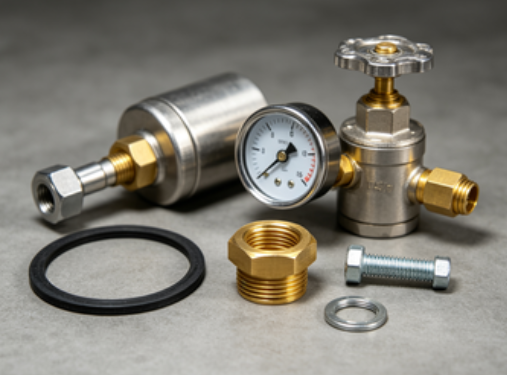
The valve is removed so the interior can be examined. Inspectors look for internal corrosion, contamination and residue. The valve itself is assessed separately — it may be serviced, replaced or condemned.
Internal condition matters as much as external appearance. A cylinder that looks fine outside may have significant corrosion inside, particularly if water or contaminants have entered through a faulty valve.
Step Three: Cylinder Shot Blasting
Cylinder shot blasting removes old paint, rust, scale and contamination from the surface. Steel shot or grit is propelled at high velocity, cleaning the metal and creating a surface profile that helps the new coating adhere.
This step does more than clean. It exposes defects that were hidden under paint — small cracks, pitting and weld problems become visible. In this sense, blasting is also an inspection step.
The blast media and pressure must be controlled. Excessive blasting can reduce wall thickness or damage the surface; insufficient blasting leaves contaminants that cause coating failure. Operators need training and calibrated equipment.
Step Four: Inspection and Measurement
After blasting, the clean cylinder is examined again. This is when wall thickness is measured, welds are checked and any defects revealed by blasting are evaluated. Damage that was invisible under old paint can now be assessed properly.
Where required, non-destructive testing methods such as magnetic particle or ultrasonic inspection are applied to critical areas.
Qingdao Evergreen Import and Export Co., Ltd. operates reconditioning processes that treat inspection as a continuous activity rather than a single checkpoint, because each stage can reveal something the previous one missed.
Step Five: Hydrostatic Testing
A refurbished gas cylinder must be hydrostatically tested to confirm its structural integrity. The cylinder is filled with water, pressurised to the specified test pressure and monitored for permanent expansion or leakage.
This test is the definitive check on the shell. A cylinder that fails must be permanently condemned — there is no acceptable way to repair a failed pressure test.
The test date and results are recorded, and the cylinder is stamped or marked with the new test information.
Step Six: The Cylinder Repainting Process
Once the cylinder passes testing, the cylinder repainting process begins. This typically involves:
- Surface cleaning after blasting and testing.
- Application of a primer where required.
- Application of the top coat, often by powder coating or wet paint.
- Curing under controlled temperature and time.
- Restoration of all required markings.
Marking restoration deserves special attention. The stamped markings are permanent and must not be obscured, but painted or labelled identification may need to be renewed. Colour, branding and safety labels must match the destination market’s requirements.
Step Seven: Valve Fitting and Final Check
A serviced or new valve is fitted, the cylinder is checked for leaks, and final documentation is completed. The cylinder is then ready to return to service with a recorded history.
Quality Control and Traceability
A professional reconditioning operation keeps records for every cylinder: incoming condition, work performed, test results and new markings. This traceability is what separates legitimate reconditioning from informal repainting.
Buyers should ask reconditioning providers for their procedures, test records and rejection criteria. A facility that cannot explain its rejection rate is probably not inspecting properly.
When Reconditioning Makes Sense
Reconditioning is most valuable in:
- Exchange systems with large circulating fleets.
- Markets where new cylinders are expensive or import duties are high.
- Operations with a strong inspection and tracking system.
- Cylinders with sound shells and failed coatings.
It is less attractive where cylinder prices are low, labour is expensive or tracking is poor.
Quick Takeaways
- Reconditioning restores sound cylinders; it cannot make unsafe ones safe.
- Inspection happens before, during and after blasting.
- Shot blasting cleans the surface and reveals hidden defects.
- Hydrostatic testing is the definitive pass or fail decision.
- Full records and traceability distinguish professional reconditioning.
Frequently Asked Questions
Can any cylinder be reconditioned?
No. Cylinders with structural damage, heat exposure or excessive corrosion must be scrapped.
How long does a reconditioned cylinder last?
It can serve for many additional years if it passes testing and local regulations permit continued use.
Does repainting affect certification?
The paint itself usually does not change pressure approval, but markings and colour must meet local rules.
Is reconditioning cheaper than buying new?
Often yes for high-volume fleets, provided the shells are sound and the process is properly managed.
| About Qingdao Evergreen Import and Export Co., Ltd. Qingdao Evergreen Import and Export Co., Ltd. manufactures and exports LPG cylinders, valves and gas fittings to markets worldwide, supporting buyers with region-specific specifications, certification and reliable supply. |
The bottom line: reconditioning is a safety process with a coating step at the end — never the other way around.