
A reliable cylinder leak test is the final gate between a gas cylinder and the customer: LPG leak detection catches problems that pressure tests cannot, a routine gas cylinder leak check protects homes and workplaces, the humble soapy water test remains the industry standard for speed and simplicity, and formal cylinder leak testing standards define how and when leaks must be measured.
A cylinder can pass a hydrostatic test and still leak at the valve, the thread or a microscopic flaw. Leak testing addresses a different question: not whether the shell is strong, but whether the assembled cylinder holds gas.
Why Leak Testing Is Separate from Pressure Testing
Hydrostatic testing verifies the strength of the shell by pressurising it with water. Leak testing verifies the tightness of the complete assembly, including the valve, threads and seals. Both are required because a strong cylinder can still leak, and a leak-tight cylinder can still be structurally weak.
Most leaks occur at connections rather than in the shell. The valve-to-cylinder thread, the valve seat and the regulator connection are the common culprits. These are exactly the areas a pressure test on the empty shell does not fully evaluate.
The Soapy Water Test: Simple and Effective
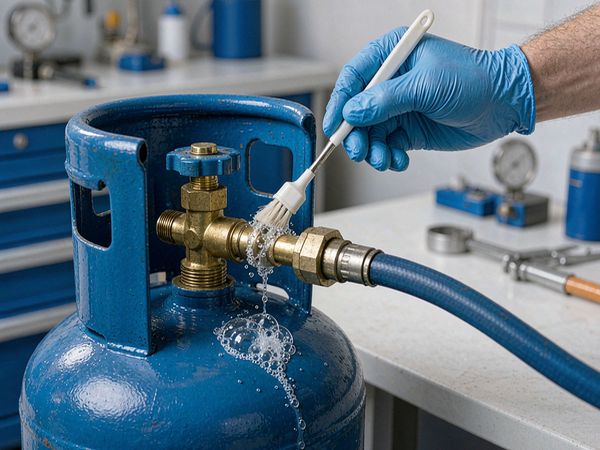
The soapy water test is the most widely used gas cylinder leak check in the world. A soap solution is applied to connections and suspected areas with a brush or spray. If gas is escaping, bubbles form at the leak point.
Its advantages are significant:
- Almost no cost.
- Immediate, visible result.
- Safe and easy to use.
- Works on any accessible connection.
- Requires minimal training.
Its limitations are equally clear: it only works on accessible surfaces, it cannot quantify the leak rate, and it may miss very small leaks. It is also affected by wind, cold and dirty surfaces.
Despite these limits, the soapy water test remains a first-line method in filling plants, service workshops and households because it is fast and reliable for the majority of practical leaks.
Electronic LPG Leak Detection
For applications that need greater sensitivity or quantification, electronic detectors are used. Common types include:
- Combustible gas detectors that sense LPG in the air.
- Infrared detectors that identify hydrocarbon gases specifically.
- Ultrasonic detectors that hear the sound of escaping gas.
- Pressure decay systems that monitor pressure loss over time.
Electronic LPG leak detection is valuable in enclosed spaces, at automated filling lines and where documentation of leak rates is required. It can detect leaks too small for soap bubbles and can be calibrated to specific thresholds.
The trade-off is cost, training and maintenance. Detectors need calibration and battery checks, and cheap units produce false readings. For most small operations, a good soap solution plus a quality detector is the practical combination.
Where Leaks Occur
Understanding common leak points makes inspection more effective:
- Valve threads: damaged or cross-threaded connections.
- Valve seat: worn sealing surfaces.
- Regulator connection: mismatched threads or damaged seals.
- Weld seams: rare, but possible with poor manufacturing.
- Relief devices: damaged or incorrectly fitted.
- Caps and plugs: missing or loose on empty cylinders.
A systematic check works through each point in order rather than randomly spraying the whole cylinder.
Cylinder Leak Testing Standards
Formal cylinder leak testing standards vary by region and standard. They typically specify:
- The test medium and pressure.
- The detection method and sensitivity.
- The duration of the test.
- Acceptance criteria.
- Documentation requirements.
Some standards require a leak test at manufacture, at every refill, or at requalification. Others leave the frequency to the operator or local regulation. Exporters must check which requirements apply in the destination market.
Qingdao Evergreen Import and Export Co., Ltd. builds and tests cylinders to the standards of the markets they serve, including leak checks at the assembly stage, because a certified shell is only part of a safe product.
Leak Testing in the Filling Plant
Filling plants have the greatest responsibility for leak control because they handle cylinders repeatedly. A good procedure includes:
- Visual check before filling.
- Leak check after valve connection.
- Leak check after filling.
- Regular calibration of detection equipment.
- Records of failed cylinders and their disposal.
Operators should be trained to respond correctly to a detected leak: close the valve, isolate the cylinder, ventilate the area and tag the cylinder for repair or condemnation.
Home and Small-Business Checks
For end users, a simple routine is enough:
- Smell for gas after connecting a cylinder.
- Apply soapy water to the connection.
- Watch for bubbles for several seconds.
- Tighten or replace the connection if bubbles appear.
- Never use a flame to search for a leak.
Any persistent smell of gas is a reason to shut off the supply and seek help, even if a soap test appears negative.
The Cost of Ignoring Leaks
A small leak wastes gas, but that is the least of the problem. LPG is heavier than air and collects in low areas. In a confined space, a slow leak can reach flammable concentration without warning.
The consequences can include fire, explosion, asphyxiation and liability claims. For a business, a single incident can far outweigh the cost of a proper leak-testing programme.
Quick Takeaways
- Leak testing checks tightness; hydrostatic testing checks strength. Both are needed.
- The soapy water test is fast, cheap and effective for most practical leaks.
- Electronic detectors offer higher sensitivity and documentation capability.
- Most leaks occur at valves, threads and seals rather than the shell.
- Check the leak testing standards required in your destination market.
Frequently Asked Questions
How often should a gas cylinder be leak checked?
At every connection and refill, and periodically in storage, according to local rules and operating practice.
Can I use soapy water on any part of the cylinder?
Yes on accessible connections and surfaces, but keep the solution away from electrical components and moving parts.
Are electronic detectors worth the cost?
For professional filling operations and enclosed spaces, yes. For occasional household checks, soap solution is usually enough.
What should I do if I smell gas?
Shut off the supply if safe, ventilate, avoid flames and switches, and have the cylinder checked by a qualified person.
About Qingdao Evergreen Import and Export Co., Ltd.
Qingdao Evergreen Import and Export Co., Ltd. manufactures and exports LPG cylinders, valves and gas fittings to markets worldwide, supporting buyers with region-specific specifications, certification and reliable supply.
The bottom line: strength keeps a cylinder from bursting; leak testing keeps it from quietly becoming a hazard.