A forklift LPG cylinder is not simply a household gas bottle in a different colour: an industrial propane cylinder is built for high-flow demand, frequent refills and constant vibration, a forklift fuel cylinder must stay secure on a moving truck, and a warehouse gas bottle used in material handling LPG operations has to meet workplace safety rules that consumer cylinders never face.
Indoor logistics runs on LPG. In warehouses, distribution centres and factories, propane-powered forklifts dominate because they run cleanly, refuel quickly and work indoors where diesel cannot. That makes the cylinder a critical piece of operating infrastructure — and one that is frequently under-specified.
Why LPG Dominates Material Handling
Forklifts need a fuel that is energy-dense, clean-burning and fast to replenish. LPG meets all three requirements. A cylinder swap takes minutes, unlike battery charging, and the fuel burns without the particulate matter that makes diesel unsuitable indoors.
This is why material handling LPG is a major and stable demand source in the industrial sector. Unlike seasonal consumer demand, forklift fuel consumption is continuous and predictable — a fleet running two or three shifts consumes cylinders every day.
The consequence for buyers is that durability and service support matter more than initial price. A cylinder that fails in a warehouse disrupts operations immediately.
How Forklift Cylinders Differ
Industrial cylinders used on forklifts differ from household bottles in several ways:
- Higher flow capacity: forklift engines demand significantly more gas than a cooking stove.
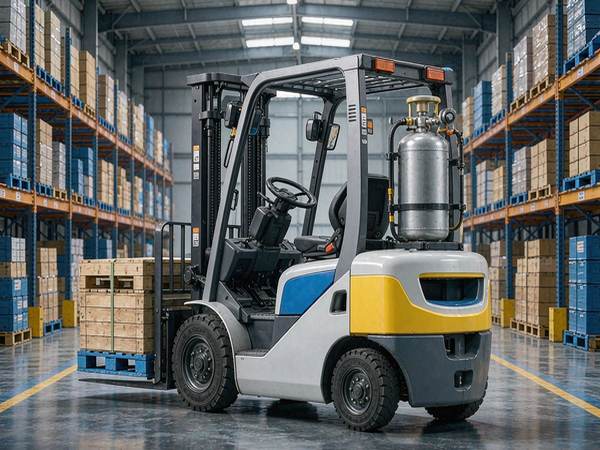
- Secure mounting: the cylinder must lock into a bracket and withstand vibration and impact.
- Valve protection: the valve is exposed during handling and needs a robust guard.
- Durability: cylinders are exchanged many times a week in busy facilities.
- Marking: workplace safety rules often require clear identification and test dates.
A household cylinder pressed into forklift service may technically connect, but it is not designed for the flow rate or the handling environment. That mismatch creates both performance and safety problems.
Common Forklift Cylinder Sizes
Different markets use different formats. In North America, 20lb and 30lb cylinders are common for smaller trucks, while 43lb and 100lb formats serve larger equipment. In Europe and Asia, 10kg, 13kg and 15kg cylinders are typical, with larger sizes for heavy-duty trucks.
The right size depends on the truck, the shift length and the refuelling setup. A high-cycle operation may prefer larger cylinders to reduce changeover frequency, while a facility with limited storage may choose smaller ones for easier handling.
Qingdao Evergreen Import and Export Co., Ltd. supplies industrial propane cylinders in multiple sizes and valve configurations, and we regularly help buyers match the cylinder to the forklift fleet and the local refill infrastructure.
Valve and Connection Requirements
The valve on a forklift fuel cylinder must deliver high flow and resist vibration. In North America, POL connections are common on larger cylinders, while smaller units may use QCC-type valves. Other markets use DIN, BS or JIS standards.
The key is to match the valve to the forklift’s fuel system and the filling equipment. A restricted valve can starve the engine under load, causing loss of power and poor combustion. Always confirm the flow rating, not just the connection type.
Refill and Exchange Logistics
Most forklift operations use one of two models: on-site refill from a bulk tank, or cylinder exchange through a supplier. Each has implications for the cylinder.
On-site refill reduces transport and gives tighter control over fill quality, but requires a bulk installation and trained operators. Exchange systems outsource the filling but demand a large circulating fleet of cylinders, robust tracking and enough spare capacity to cover peak demand.
In high-turnover warehouses, the cylinder fleet is a working asset that needs a management system. Serial numbers, test dates and inspection records should be tracked, because a cylinder that reaches its requalification date must be removed from service.
Safety in the Warehouse
Warehouses are confined spaces with heavy traffic, so cylinder safety is especially important:
- Store cylinders upright in a ventilated, designated area.
- Secure cylinders in forklift brackets before movement.
- Check connections for leaks after every changeover.
- Keep cylinders away from heat sources and charging equipment.
- Train operators in correct changeover procedure.
- Never store cylinders in enclosed cabinets without ventilation.
Leaks in a warehouse can accumulate at floor level, where LPG vapour tends to collect. Detection and ventilation are therefore essential.
Total Cost Considerations
The purchase price of a forklift LPG cylinder is only one part of the cost. Buyers should also consider refill cost, cylinder loss, inspection and replacement, downtime during changeover and the cost of managing a large circulating fleet.
A more durable cylinder with a longer service life often costs less over five years than a cheaper bottle that needs frequent replacement. Similarly, a well-managed exchange system can reduce losses and improve availability.
Quick Takeaways
- Forklift cylinders are designed for high flow, frequent handling and vibration.
- Valve flow capacity matters as much as the connection type.
- Choose cylinder size based on truck demand and shift pattern.
- Track test dates and inspection records in high-cycle fleets.
- Warehouse safety requires secure storage, ventilation and trained operators.
Frequently Asked Questions
Can a household propane cylinder be used on a forklift?
It may connect, but it is not designed for the required flow rate or handling environment and should not be used.
What size cylinder is typical for forklifts?
Common formats range from 10kg to 100lb depending on the market and the truck, with 20lb to 43lb widely used.
How often should forklift cylinders be inspected?
At every changeover for visible damage, and formally at the interval required by local regulation.
Are LPG forklifts allowed indoors?
In most markets yes, because LPG burns cleanly, but ventilation and safety rules apply.
| About Qingdao Evergreen Import and Export Co., Ltd. Qingdao Evergreen Import and Export Co., Ltd. manufactures and exports LPG cylinders, valves and gas fittings to markets worldwide, supporting buyers with region-specific specifications, certification and reliable supply. |
The bottom line: in material handling, the cylinder is part of the machine — specify it as carefully as the truck.