Most people see a finished gas cylinder and think of it as a simple object: a metal bottle with a valve. In reality, producing a reliable cylinder is a sequence of precisely controlled steps, each of which can introduce a defect if handled carelessly. Understanding the manufacturing process helps buyers appreciate why quality varies between suppliers — and why cheap cylinders often cost more in the long run.
The journey from steel coil to certified cylinder involves forming, welding, heat treatment, testing, surface treatment and inspection. Let us walk through it.
Step One: Material Selection and Cutting
It begins with specially developed pressure-vessel steel supplied as coils or plates. The steel must meet strict requirements for strength, ductility and chemical composition. Incoming material is checked against certificates and sampled for testing.
The coil is cut into circular blanks of the required diameter. Blank size determines cylinder diameter and height, so accuracy here affects everything downstream. Burrs or edge defects from cutting can become stress concentrators later.
Step Two: Deep Drawing
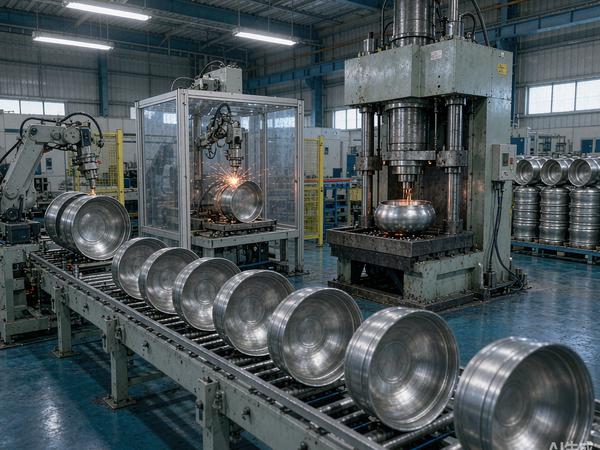
The blank is placed in a press and formed into a cup shape through deep drawing. This is one of the most critical steps. The steel must stretch and flow without thinning excessively, wrinkling or cracking.
Lubrication, die condition, press speed and material properties all influence the result. Skilled operators watch for thinning at the corners and base, where the material is stretched most. A cup with uneven wall thickness will never become a reliable cylinder, no matter how good the later steps are.
For this reason, manufacturers with controlled deep-drawing processes produce more consistent cylinders. It is a capability that is easy to claim and hard to verify — which is why plant audits matter.
Step Three: Forming the Two Halves
Most LPG cylinders are made from two drawn halves — a top and a bottom — that are later joined. The top half receives the opening for the valve boss, which is formed and prepared to accept the valve assembly.
The base ring is formed separately and attached later. Its design affects how the cylinder stands, how it distributes weight and how it resists the moisture that collects at the bottom.
Step Four: Welding
The two halves are joined by circumferential welding. This is a high-stakes operation. The weld must be strong, continuous and free of defects such as porosity, cracks or incomplete fusion.
Modern plants use automated welding with controlled parameters to achieve repeatability. The cylinder rotates while the weld travels around the seam. Operator skill still matters in setting up and monitoring the process.
After welding, the seam is inspected visually and often with non-destructive methods. A weld defect discovered at this stage can be repaired or rejected. The same defect discovered after the cylinder is in service is far more expensive.
Step Five: Heat Treatment
Welding introduces residual stresses and changes the microstructure of the steel around the seam. Heat treatment, where required, relieves these stresses and restores consistent mechanical properties.
Temperature and time must be controlled carefully. Too little treatment leaves stress; too much can weaken the material. Furnace uniformity matters because cylinders in different positions must receive the same treatment.
Not all cylinders require the same heat treatment, and requirements vary by standard and material. What matters is that the process is defined, controlled and recorded.
Step Six: Valve Boss and Threading
The valve boss is fitted and the internal thread is cut or formed to precise specifications. This is a small area with enormous responsibility — it is where the cylinder connects to the customer’s equipment.
Thread accuracy, surface finish and boss alignment determine whether the valve seals correctly. Cross-threading or poor tolerances create leak paths. Many field failures trace back to this step.
Step Seven: Hydrostatic Testing
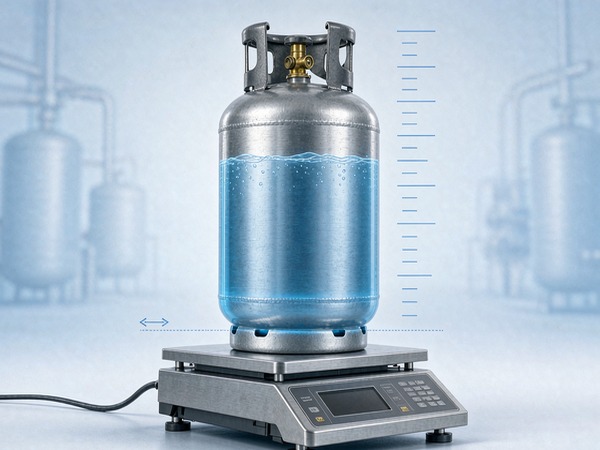
Before coating, the cylinder is tested with water at a pressure above its working rating. This verifies structural integrity and measures expansion behaviour. Failed cylinders are removed at this point.
Step Eight: Surface Preparation and Coating
The cylinder is degreased, blasted to remove rust and create a surface profile, then coated by powder or paint. Curing follows, then inspection for coverage and finish.
Step Nine: Final Assembly and Inspection
The valve is fitted, the cylinder is weighed and checked, markings are applied, and final documentation is created. Only then is it ready to ship.
Why Process Control Is the Real Product
Anyone can buy steel and a press. What separates a reliable cylinder supplier is the discipline applied across all these steps: calibrated equipment, trained operators, documented parameters, in-process inspection and traceable records.
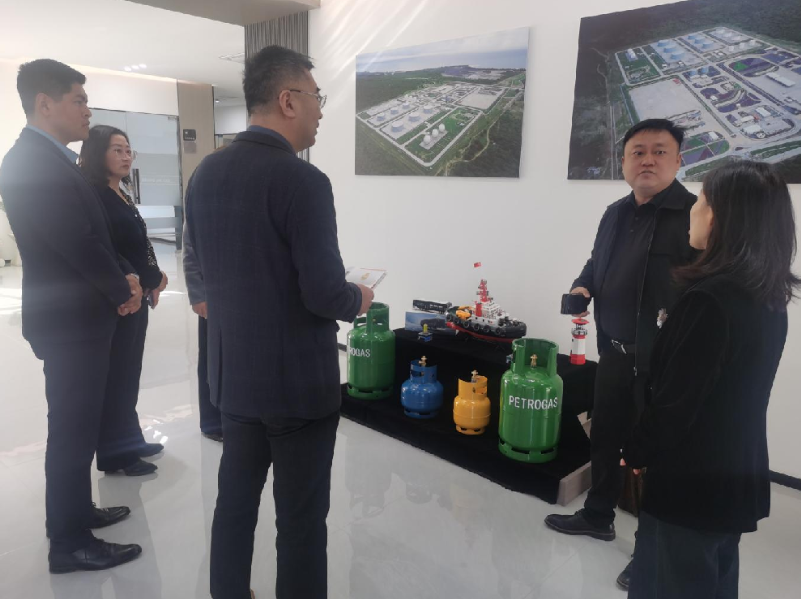
When buyers audit a factory, they should look beyond the final product. Watch the deep-drawing press, the welding station and the test area. Ask how parameters are controlled and what happens when a defect is found. The answers reveal far more than a polished showroom.
Quick Takeaways
- Cylinder quality is determined across many steps, not just final inspection.
- Deep drawing and welding are the highest-risk forming operations.
- Heat treatment restores properties changed by welding.
- The valve thread is a small feature with major safety consequences.
- Process discipline and traceability distinguish good suppliers from average ones.
Frequently Asked Questions
Why are most LPG cylinders made from two halves?
Deep drawing two halves and welding them is efficient and allows good control of shape and thickness.
What is the most common manufacturing defect?
Weld defects and uneven wall thickness from forming are among the most serious.
Can defects be repaired?
Some weld defects can be repaired under controlled procedures, but severe thinning or structural problems mean rejection.
How can buyers verify manufacturing quality?
Through factory audits, process records and independent inspection of sample cylinders.
The bottom line: a cylinder is only as good as the process that made it. Understanding the line turns a vague question — “is this supplier good?” — into a set of specific, answerable checks.