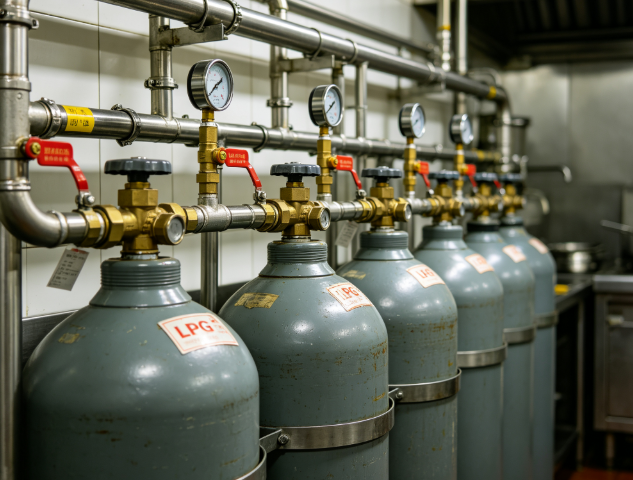

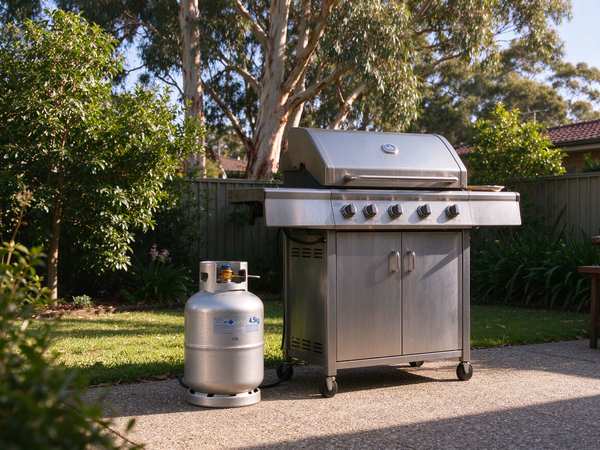
Australia and New Zealand have a distinctive LPG culture. From the iconic BBQ gas bottle on every suburban patio to the 4.5kg cylinders powering the popular “buddy” heaters in winter, from caravan and 4WD trips into the Outback to commercial catering kitchens, LPG is woven into the everyday fabric of Antipodean life. The standard that governs this market is AS2469 — the Australian/New Zealand Standard for refillable welded steel cylinders for LPG, up to and including 40L water capacity. Qingdao Evergreen Import and Export Co., Ltd. has built a growing export business around AS2469-certified cylinders for the Australian and Oceania market.
AS2469 is a rigorous standard. It specifies material requirements (killed, manganese-silicon steel suitable for welding), wall thickness calculations based on diameter and working pressure, welding procedure qualifications approved by the regulator, pressure testing at 2.0 times working pressure, and permanent marking requirements that must be met before an Australian LPG cylinder can be legally filled and circulated under Australian and New Zealand law. Regulated by state-based technical safety authorities (such as SafeWork NSW, WorkSafe Victoria, ESWA in Western Australia, and the New Zealand Energy Safety), the standard is enforced at the filling plant level — a cylinder without proper AS2469 markings will simply not be filled, full stop.
Qingdao Evergreen’s AS2469 range covers the most popular Australian cylinder sizes:
The LPG-1.25kg (HR40005) is a tiny 3L cylinder weighing just 2.77kg empty, 253mm tall, with a 184.2mm outside diameter. It is used for small portable cookers, fishing tackle heaters, specialty camping applications, and the growing market for compact tabletop BBQs.
The LPG-2kg (HR40006) is a 4.7L cylinder, 3.25kg empty, 295mm tall. It is popular for small camping stoves, portable lanterns, and compact boat heaters.
The LPG-3kg (HR40007) is a 7.2L cylinder, 4.5kg empty, 300mm tall. It is the classic size for small boat cabin heaters and compact camping appliances.
The LPG-4.0kg (HR40013) is a 9.6L cylinder, 5.38kg empty, 362mm tall. It is a versatile mid-size bottle that works for camping, boating, and small home BBQs.
The LPG-4.5kg (HR40008) is the iconic Australian “swap-and-go” size — a 10.7L cylinder weighing 5.75kg, 382mm tall, with a 254.4mm outside diameter. This is the most recognizable consumer LPG cylinder in Australia, used on millions of home BBQs and exchanged at supermarkets, service stations, and hardware stores.
The LPG-9kg (HR40009) is a 21.6L cylinder, 8.3kg empty, 464mm tall. It is the standard larger BBQ and caravan cylinder, also used for patio heaters and small home backup heating.
The LPG-12kg (HR40022) is a 28.7L cylinder, 10.26kg empty, 572mm tall. It is used for larger caravans and motorhomes, home backup heating, and small commercial installations.
The LPG-45kg (HR40048) is the commercial workhorse — 108L water capacity, 35.6kg empty, 1245mm tall. Built to AS2470 (the related standard for larger cylinders), it is used in restaurants, bakeries, commercial laundries, and industrial kitchens across Australia.
All AS2469 cylinders in the Evergreen range are rated to 2.55 MPa working pressure and hydrostatically tested at 3.3 MPa — a comfortable safety margin above the 2.0 MPa minimum. They are fitted with the YSF-RA-2 valve (on the smaller 1.25 to 4.5kg sizes) or YSF-RA-1 valve (on the 9kg and 45kg sizes), which matches the standard POL (Prest-O-Lite) connection used on Australian regulators, BBQs, and caravan pigtails.
What Australian distributors appreciate is that these cylinders are not just geometric copies — they are built to the actual standard, with the correct permanent markings: the AS2469 standard number, the manufacturer’s mark, the water capacity in liters, the tare weight in kilograms, the month and year of manufacture, and the cyclical requalification date marking. This means the cylinders can enter the Australian refill ecosystem without regulatory friction and be filled at any licensed filling plant in the country.
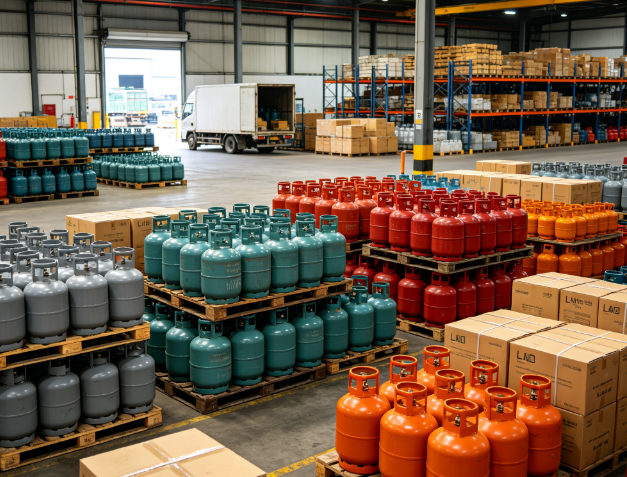
The Australian portable propane market is characterized by a mature cylinder exchange network — brands like Gas Swap, Supagas, Elgas, and Cepogas operate thousands of retail points where customers swap an empty cylinder for a full one without waiting for refilling. This model requires cylinders that are durable, visually uniform, and compatible with automated filling and handling equipment. Evergreen cylinders can be supplied with custom branding, color-matched paint (red, blue, green, or the customer’s specific corporate color), and protective collars that make them instantly recognizable on retail shelves.
Beyond consumer BBQ and camping, the Oceania gas market has strong industrial and rural demand. Australian farms use LPG for crop drying, poultry brooding, and weed flaming. Remote properties and Aboriginal communities rely on LPG for household cooking and hot water where mains gas is unavailable. The tourism and hospitality sector — from outback roadhouses to coastal resorts and ski lodges — uses large volumes of LPG for kitchens and guest amenities. The company also supplies to Pacific Island nations — Fiji, Papua New Guinea, Solomon Islands, Vanuatu — where LPG is replacing kerosene and biomass for household cooking and where imported certified cylinders are essential infrastructure.
Working with Qingdao Evergreen means Australian importers get: factory-direct pricing from one of China’s experienced cylinder manufacturers, full type-test and certification documentation to support Worksafe registration and state-based approval, flexible container loads that mix multiple cylinder sizes to optimize freight cost per unit, and a supply partner that understands the specific requirements of the antipodean market — including the harsh UV exposure that demands high-quality powder coating, and the rough outback handling that demands strong bases and valve guards.
As Australia continues its transition toward cleaner household energy, LPG remains a critical bridge fuel — especially for rental properties, rural homes, apartment balconies where natural gas is unavailable, and outdoor cooking where electrification is impractical. The cylinders that power this transition will be built to AS2469, tested to exacting standards, and supplied by partners who understand that in the Australian market, a gas bottle is not just a product — it is a beloved institution, as quintessentially Australian as the backyard BBQ itself.