
Why this matters
- Composite cylinders cut empty weight by 30–50 percent and are moving into mainstream LPG distribution.
- Cost, certification and fleet economics — not novelty — are driving the 2026 inflection point.
- Steel remains stronger on unit cost, repair infrastructure, recycling and bulk storage.
A gas cylinder used to be judged by one question: does it hold gas safely? In 2026, that question has changed. Buyers now ask how much it weighs, how long it lasts, how easily it can be tracked, and what it costs to move through a supply chain that is under pressure from every direction. That shift is pushing composite LPG cylinders out of niche applications and into the mainstream conversation — and it is forcing steel cylinder makers to answer some uncomfortable questions.
This is not a story about one technology replacing another overnight. It is a story about economics, logistics and regulation finally lining up behind a product that has been technically ready for years. If you buy, distribute or specify LPG cylinders, here is what the composite shift really means — and where steel still has the upper hand.
The Weight Problem Nobody Can Ignore Any More
LPG cylinders are heavy. A conventional 20 lb steel bottle weighs roughly 17 to 20 pounds empty. A 100 lb commercial cylinder can weigh close to 70 pounds empty. Across a fleet of thousands of cylinders, that empty weight is not a minor detail — it is a structural cost.
Every extra kilogram is paid for three times: when the cylinder leaves the factory, when it is trucked to the distributor, and again when a delivery driver lifts it into a customer’s premises. In markets where last-mile delivery costs are rising faster than gas prices, weight has become a boardroom issue.
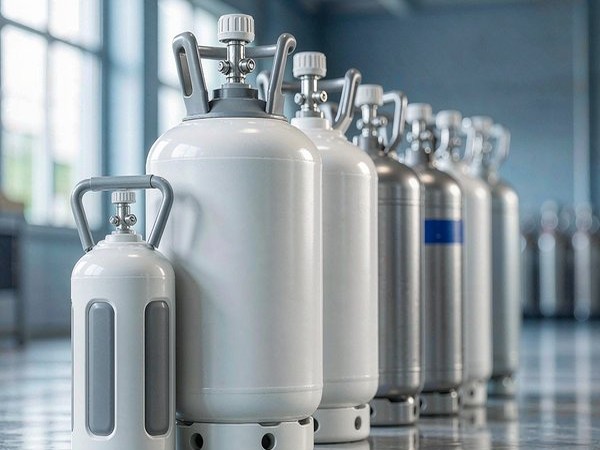
Composite cylinders — typically aluminium or plastic liners wrapped in carbon fibre or glass fibre — cut empty weight by 30 to 50 percent. For a delivery route with 120 stops, that can translate into meaningfully less fuel burn, lower vehicle wear, and fewer manual-handling injuries. In Australia and New Zealand, where BBQ gas bottles are a cultural fixture and workplace safety rules are strict, the lightweight argument has already moved from marketing slide to procurement requirement.
What Actually Changed in 2026
Composite technology itself is not new. Type 3 and Type 4 cylinders have been used in breathing apparatus, automotive fuel systems and industrial gas for decades. What changed is the cost curve and the certification landscape.
Three developments matter:
- Fibre prices stabilised. After several volatile years, carbon fibre supply has normalised enough for cylinder makers to quote firm 12-month prices. That removes the single biggest objection from volume buyers: unpredictable cost.
- Certification pathways widened. More composite LPG cylinders now carry approvals recognised across multiple regions, including DOT, TC, CE and AS-style frameworks. A distributor no longer has to choose between a lightweight cylinder and a legally importable one.
- Fleet operators started asking. Large rental and refill networks run the numbers differently from retail buyers. They care about total cost of ownership, not sticker price. When a lighter cylinder reduces vehicle payload penalties and injury claims, the math often favours composite even at a higher upfront price.
The Safety Conversation Is More Nuanced Than the Headlines
Marketing around composite cylinders often leans on a single dramatic image: a steel cylinder rupturing versus a composite cylinder gently venting. That image is directionally fair but technically lazy.
Composite cylinders do behave differently under extreme stress. A filament-wrapped structure tends to fail by weeping or bursting in a controlled manner rather than fragmenting. That is a genuine safety advantage in fire exposure scenarios. It is also why many emergency services and marine applications moved to composite first.
But a steel cylinder that is manufactured to a recognised pressure-vessel standard, hydrostatically tested, fitted with a certified valve and inspected on schedule is extremely safe. The real risk in most markets is not the material — it is the untraceable, uncertified, rusted bottle that has been refilled a hundred times and inspected zero times. Switching to composite does not fix a broken inspection regime.
Buyers who frame this as “composite safe, steel dangerous” are missing the point. The point is traceability and lifecycle control, and both materials can deliver it when the supply chain is disciplined.
Where Steel Still Wins
For all the momentum behind composites, steel is not going quietly — and for good reason.
Cost per unit at volume. A certified steel cylinder remains significantly cheaper to manufacture than a comparable composite one. In price-sensitive markets across Africa, the Middle East and parts of Asia, that gap still decides tenders.
Repair and refurbishment infrastructure. Steel cylinders can be visually inspected, shot-blasted, repainted and re-tested with equipment that already exists in almost every filling plant. Composite inspection often requires more specialised tooling and trained personnel.
Recycling value. A scrap steel cylinder has a well-understood residual value. Composite recycling is improving but remains less standardised, which matters in markets with informal scrap economies.
High-capacity stationary applications. For large commercial and industrial storage, steel’s robustness and lower cost per litre of LPG stored keep it dominant. Composite wins on portability, not bulk storage economics.
The smart money is not betting on a single material. It is betting on the right material for the right route, customer and regulatory environment.
What It Means for Distributors
If you manage a cylinder fleet, the practical question is not “should I switch?” It is “where does a lighter cylinder pay for itself fastest?”
Start with three segments:
- High-frequency urban delivery, where drivers lift cylinders multiple times per hour. Weight savings show up directly in labour cost and injury risk.
- Remote or off-grid customers, where freight is the largest component of landed cost.
- Premium residential and hospitality segments, where a clean, modern-looking cylinder is part of the product experience.
Then run a simple pilot: 50 composite cylinders against 50 steel cylinders on the same route for 90 days. Track fuel per stop, handling incidents, refill cycle time and customer complaints. The numbers will tell you more than any supplier brochure.
The Bigger Picture
The composite shift is really a symptom of a larger change in LPG distribution. Gas is becoming a service business. Cylinders are becoming assets that need to be tracked, maintained and optimised, not just filled and dropped off.
That is good news for buyers willing to modernise. It is bad news for anyone still treating a cylinder as a commodity bought on price alone. In 2026, the cheapest bottle can still be the most expensive one you own — because weight, compliance and downtime now cost more than the steel inside it.
Quick Takeaways
- Composite cylinders cut empty weight by 30–50 percent and are moving into mainstream LPG distribution.
- Cost, certification and fleet economics — not novelty — are driving the 2026 inflection point.
- Steel remains stronger on unit cost, repair infrastructure, recycling and bulk storage.
- Safety depends on certification and inspection discipline, not material alone.
- Run a route-level pilot before committing to a fleet-wide switch.
Frequently Asked Questions
Are composite cylinders approved for LPG in most markets?
Many are, but approval is region- and model-specific. Always verify the exact certificate against your import jurisdiction.
Do composite cylinders last longer than steel?
They resist corrosion better, which can extend service life in humid or coastal environments. Actual life still depends on inspection and handling.
Can composite cylinders be refilled at standard plants?
Usually yes, provided the filling equipment and procedure match the cylinder specification and local rules.
Is the higher price worth it?
It depends on how often the cylinder is lifted and moved. High-turnover routes tend to justify it; low-turnover stock often does not.
The bottom line: 2026 is not the year steel cylinders became obsolete. It is the year buyers finally started comparing cylinders on total cost instead of purchase price — and that changes everything.