
A filled LPG cylinder is not ordinary cargo. It is a pressurized, flammable hazardous material, and moving it — whether across a city or across an ocean — triggers a layer of rules that many buyers underestimate. Transport non-compliance rarely makes headlines until something goes wrong, but it can stop a shipment at a border, void insurance or create serious liability.
For distributors and exporters, understanding the basics of dangerous goods transport is not optional. It is part of delivering a cylinder safely and legally to the customer.
Why LPG Cylinders Are Classified as Dangerous Goods
LPG is flammable and stored under pressure. In transport regulations it falls under Class 2, gases, with subsidiary risk labels for flammability. Filled cylinders therefore require specific packaging, labelling, documentation, segregation and vehicle requirements.
Empty cylinders are not automatically safe either. Residual gas can remain, so many authorities treat “empty” cylinders as dangerous goods unless they have been properly purged and certified. This is a common source of confusion.
The classification drives everything that follows: how the cylinder is packed, what label it carries, which documents accompany it, how it is loaded, and who is qualified to handle it.
The Main Regulatory Frameworks
Different modes of transport are governed by different rules:
- Road transport in Europe follows ADR, the European Agreement concerning the International Carriage of Dangerous Goods by Road.
- Road transport in North America follows DOT hazardous materials regulations in the United States and similar rules in Canada.
- Sea transport follows the IMDG Code, the international maritime dangerous goods code.
- Air transport follows IATA rules, which are strict and rarely used for filled LPG cylinders.
Many of these frameworks are harmonised in principle but differ in detail. A shipment moving by road and then by sea must satisfy both sets of rules, and documentation must be correct for each leg.
Labels, Markings and Documents
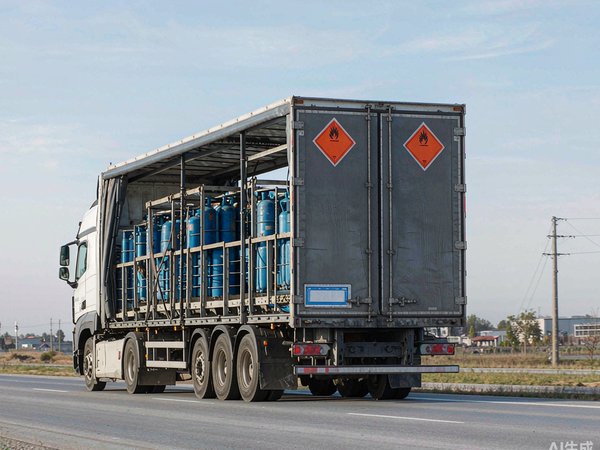
A compliant shipment is visually obvious to a trained eye. Cylinders and packaging must carry the correct hazard labels, UN numbers and proper shipping names. Vehicles and containers need placards where required.
Documentation typically includes a dangerous goods declaration, transport information, emergency response guidance and, for international shipments, customs and safety data sheets. Errors here are among the most common causes of delays.
For exporters, the practical rule is to prepare transport documents from the actual shipment data, not from a generic template. Wrong net weight, wrong UN number or an outdated emergency contact can hold a container at a port.
Packing and Segregation
Filled cylinders must be secured so they cannot move, rub together or damage valves in transit. Valve protection caps are important because a damaged valve is the most dangerous possible outcome.
Segregation rules limit which hazardous materials can travel together. Oxidizers, flammables and certain chemicals must be separated. A container loaded by someone unfamiliar with these rules can fail inspection even if each cylinder is individually compliant.
Ventilation and temperature control also matter. LPG pressure rises with temperature, so cylinders must be protected from excessive heat during transport and storage on the dock.
The Human Factor
Regulations require training for anyone involved in dangerous goods transport — packers, drivers, warehouse staff and documentation clerks. Training is not a one-time formality; it must be renewed and documented.
Many incidents trace back to a simple human error: a valve left open, a cap not fitted, a label omitted, a declaration completed incorrectly. Strong procedures reduce the chance, but trained people are the last line of defence.
What This Means for Buyers
If you import or distribute cylinders, ask your supplier specific questions:
- Are filled cylinders shipped under the correct dangerous goods classification?
- Are valve caps fitted and cylinders secured for transport?
- Are labels and documents complete and accurate for your market?
- Is the carrier qualified for dangerous goods?
- Are staff trained and records available?
Choosing a supplier who treats transport compliance seriously protects you from delays and liability. Choosing one who treats it as paperwork is a risk you inherit.
The Cost of Getting It Wrong
Non-compliance costs appear in several forms. A shipment can be detained, with demurrage charges accumulating daily. A carrier can refuse cargo. Insurance can be denied if the goods were not declared correctly. In the worst case, an incident involving misdeclared hazardous cargo creates legal and reputational consequences that far exceed the value of the shipment.
The direct cost of doing it properly — correct packaging, qualified carriers, trained staff — is small by comparison.
A Practical Compliance Checklist
Before any cylinder shipment moves, confirm the classification, the correct UN number and shipping name, labels and placards, packing and securement, valve protection, documentation, carrier qualification and emergency information. Then verify that the person signing the declaration understands what they are signing.
This is not glamorous work, but it is the difference between a routine delivery and a very expensive problem.
Quick Takeaways
- Filled LPG cylinders are Class 2 dangerous goods under transport regulations.
- Road, sea and air each have their own frameworks — ADR, DOT, IMDG and IATA.
- “Empty” cylinders may still be regulated if residual gas remains.
- Labels, documents and valve protection are common failure points.
- Trained staff and qualified carriers are essential, not optional.
Frequently Asked Questions
Can empty cylinders be shipped as normal cargo?
Usually not, unless they are properly purged and certified as free of residual gas and pressure.
What is the most common documentation error?
Incorrect or missing dangerous goods declarations and outdated emergency contact information.
Do small cylinders need the same treatment?
Yes. Classification depends on the gas and pressure, not the size of the cylinder.
Who is liable for non-compliance?
Responsibility is shared across shipper, carrier and consignee, which is why every party must verify the details.
The bottom line: moving a cylinder is a regulated activity, not just a logistics task. Get the transport right and the rest of the supply chain runs smoothly — get it wrong and nothing else matters.