A cylinder can be perfectly made and still be refused at the border. That is the reality of exporting LPG cylinders: the technical requirements are only half the battle. The other half is documentation, marking and demonstrating that every unit in a shipment matches the approval it claims.
For exporters and importers, certification is not a hoop to jump through once. It is a system that has to be maintained across production batches, valve suppliers, test records and shipping documents. Get it right and clearance is predictable. Get it wrong and a container can sit at a port while costs accumulate.
This guide explains what the major approval frameworks mean in practice and how to avoid the most common mistakes.
Why Standards Differ in the First Place
LPG cylinders are pressure vessels, and regulators treat them accordingly. Each market has developed its own requirements based on local gas composition, climate, transport conditions and safety philosophy.
Some frameworks focus heavily on design and material specification. Others place more weight on manufacturing controls, testing regimes or marking. The result is a patchwork of standards that look similar on a certificate but are not interchangeable.
A cylinder approved under one framework cannot automatically be sold in another market. Even when technical requirements are close, the legal recognition depends on the specific approval and the documentation that supports it.
DOT: The North American Benchmark
DOT requirements govern transport of pressure vessels in the United States and are widely referenced in North America. For LPG cylinders, the framework covers design, material, construction, testing and marking.
Key practical points:
- The marking on the cylinder must match the approved specification exactly.
- Hydrostatic testing and record-keeping are mandatory.
- Valve and relief device requirements are part of the approval, not optional accessories.
- Changes in material or manufacturing process can require reapproval.
A common mistake is assuming that a cylinder bearing a DOT-style mark is automatically compliant. The mark must be supported by valid manufacturing and test records from an authorised producer. Copied markings are a serious problem in some markets.
TC: Canada’s Parallel System
Transport Canada requirements share much with DOT but are legally distinct. Canadian import approvals generally require evidence that cylinders meet the applicable CSA or TC-recognised standard, along with proper marking and documentation.
Buyers shipping into Canada should confirm which standard applies to the specific cylinder type and capacity. A supplier who says “DOT is fine in Canada” without checking is taking a shortcut that may fail at customs.
AS2469: The Australian and New Zealand Reference
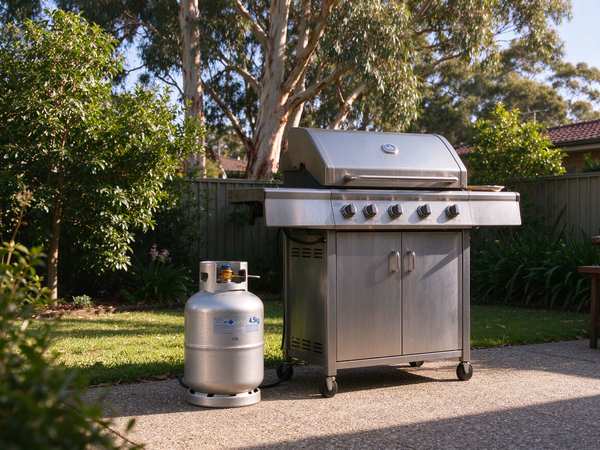
AS2469 is the key standard for LPG cylinders in Australia and New Zealand. It reflects local conditions, including high ambient temperatures and a strong barbecue and camping market.
Practical considerations include:
- Specific requirements for cylinder construction and testing.
- Marking that clearly identifies compliance with the standard.
- Consistent interpretation across states and territories.
For distributors in the region, AS2469 compliance is not optional. Retailers and fillers increasingly refuse cylinders without clear evidence of conformity, and workplace safety rules reinforce that position.
CE and the European Framework
CE marking indicates conformity with applicable European legislation. For pressure equipment, the framework is more complex than a single standard: it involves essential safety requirements, conformity assessment procedures and notified body involvement depending on the category.
For LPG cylinders sold in the European market, buyers should verify:
- The correct directive or regulation applies.
- The conformity assessment route was appropriate for the product category.
- The declaration of conformity is complete and traceable.
- Markings are applied correctly and are supported by technical documentation.
CE is often treated as a generic quality label in casual conversation. It is not. It is a legal declaration with specific obligations behind it.
Other Markets Worth Knowing
Beyond the four frameworks above, exporters frequently encounter additional approvals: SNI in Indonesia, BAM in Germany for specific gas equipment, UL listings for certain components, and various national pressure-vessel registrations across the Middle East, Africa and Latin America.
The practical advice is consistent: identify the exact legal requirement for the destination before production, not after. Designing a cylinder that can meet several standards at once is possible, but only if that is part of the original plan.
The Documentation Pack That Actually Clears Customs
A complete shipment file usually includes:
- Commercial invoice and packing list that match the physical goods.
- Certificate of origin where required.
- Manufacturing certificates linked to production batches.
- Hydrostatic test records for the cylinders in the shipment.
- Material certificates for the steel used.
- Valve certificates matching the fitted valve batch.
- Copies of relevant approvals and markings.
- Declaration of conformity or equivalent documents.
The most common failure is not missing documents. It is inconsistency. Serial numbers on the packing list that do not match the cylinders, test dates that predate manufacture, valve certificates for a different batch — these discrepancies trigger inspections and delays.
Build the pack around the physical shipment, not around a generic template.
Marking: Small Details, Big Consequences
Cylinder markings are a legal statement. They must be permanent, legible and correctly formatted. Common problems include:
- Stamps applied too shallowly to remain readable after coating and handling.
- Markings placed where valves or guards will obscure them.
- Incorrect date formats.
- Approval marks applied without the corresponding authorisation.
Before a batch ships, photograph a sample of each marking pattern and compare it against the approval documents. This takes minutes and prevents expensive disputes.
Valve and Component Compliance
A cylinder approval often covers the complete assembly, or at least specifies compatible components. Fitting a different valve to reduce cost can invalidate compliance even if the cylinder body remains identical.
Buyers should require a bill of materials for the cylinder assembly and confirm that any substitutes are formally approved. This is particularly important when spare valves are sourced locally after import.
Auditing a Supplier’s Compliance System
Certificates can be checked. Systems have to be audited. When evaluating a supplier, ask to see:
- The scope of each approval, not just the certificate.
- Production records linking raw material to finished cylinders.
- Test equipment calibration records.
- Batch traceability from steel coil to shipped cylinder.
- Procedures for handling non-conforming products.
- Evidence of recent audits or inspections.
A supplier who can walk you through this confidently is managing compliance. One who relies on a folder of scanned certificates may be relying on luck.
Planning for Regulatory Change
Standards evolve. Requirements tighten, test methods change and new approvals replace old ones. Exporters should maintain a compliance calendar that tracks renewal dates and upcoming changes in each target market.
It is also wise to keep digital copies of historical records. If a cylinder shipped three years ago is questioned today, the ability to produce its test and manufacturing record quickly can resolve the issue before it becomes a commercial problem.
Quick Takeaways
- Certification is market-specific; approval in one region does not transfer automatically.
- DOT, TC, AS2469 and CE each have distinct legal and documentation requirements.
- Most customs problems come from inconsistency, not missing paperwork.
- Markings and valves must match the approval, not just the cylinder body.
- Audit the supplier’s system, not only their certificates.
Frequently Asked Questions
Can one cylinder design meet several standards?
Often yes, but it must be engineered and documented for each framework from the start.
How long should compliance records be kept?
Follow the longest requirement across your markets. Many operators keep records for the full service life of the cylinder.
What happens if a valve is changed after import?
The replacement must be approved for that cylinder and market. Unauthorised substitution can void compliance and insurance coverage.
Are copies of certificates acceptable?
Usually only if they are complete, current and traceable to the issuing body. Ask for verification where there is doubt.
The bottom line: certification is not a document you collect. It is a chain of evidence that has to hold together from steel mill to customer site. Protect the chain and the border becomes uneventful — which is exactly what you want.