The most sustainable cylinder is not the one made from the greenest material. It is the one that stays in service the longest. That is the central insight behind the circular economics of steel LPG cylinders — and it is changing how distributors think about assets, deposits and end-of-life planning.
A steel cylinder is not a disposable container. It is a reusable pressure vessel designed to be filled, emptied, inspected, tested and returned hundreds of times over a service life that can span decades. When the system works, the environmental footprint per fill becomes remarkably small. When the system fails — through loss, theft, premature scrapping or poor refurbishment — the opposite happens.
Understanding this difference is increasingly important as customers ask harder questions about sustainability and as regulators move toward extended producer responsibility.
Why Reuse Beats Replacement
Making a new steel cylinder requires raw material, energy, forming, welding, heat treatment, testing, coating and transport. That is a significant amount of embedded resource before the bottle has ever held gas.
Extending the life of an existing cylinder spreads that footprint across more fill cycles. A bottle that serves for twenty years instead of ten effectively halves its environmental cost per delivery. This is not a theoretical benefit — it is basic arithmetic.
The circular model also makes commercial sense. A cylinder that returns to the depot, passes inspection and goes back into service represents recovered capital. A cylinder that disappears into an informal market or is scrapped early is a lost asset. Good circular practice and good asset management are the same thing.
The Four Stages of a Circular Cylinder Life
- Design for durability
Circularity starts at manufacture. Wall thickness, coating quality, foot ring design and valve protection all determine how well a cylinder survives years of handling. A bottle designed for easy cleaning and inspection will stay in service longer than one with crevices that trap moisture.
- Controlled distribution
A cylinder is only circular if it comes back. Deposits, tracking and reliable collection routes are what keep bottles inside the system. In markets where informal refill networks are common, the return rate is often the weakest link — not the cylinder itself.
- Inspection and refurbishment
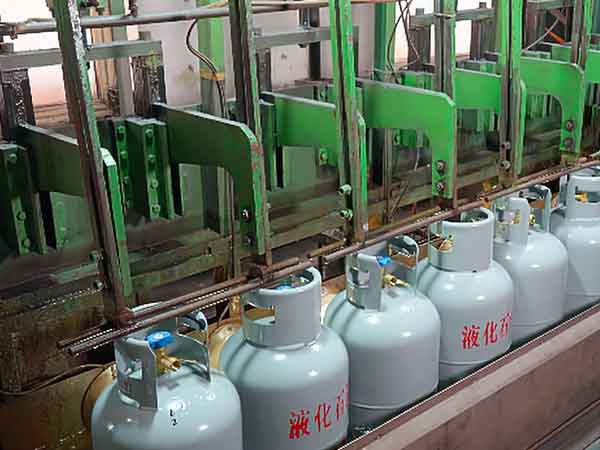
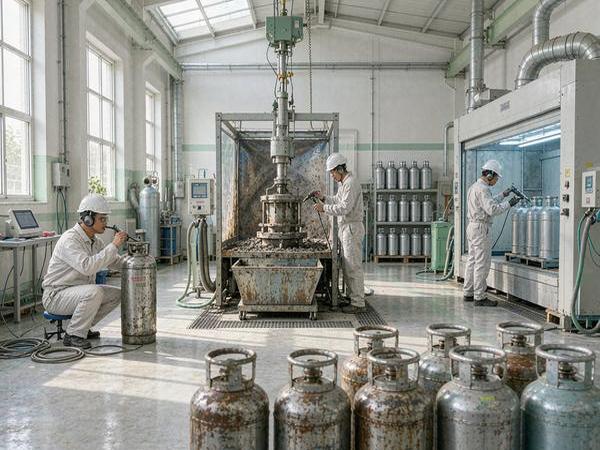
Returned cylinders should be sorted into three streams: immediately reusable, repairable after testing, and end-of-life. Repairable bottles need proper shot-blasting, visual inspection, hydrostatic testing and recoating. Shortcuts here create safety risk and shorten the next service cycle.
- Responsible end-of-life
When a cylinder truly reaches the end of its service life, steel has a major advantage: it is highly recyclable. Scrap steel retains value and can be reprocessed into new products without losing its essential properties. A well-organised scrap stream turns an old cylinder into raw material rather than waste.
The Refurbishment Question
Refurbishment is the most misunderstood stage. Done properly, it is the backbone of circularity. Done badly, it is a safety hazard.
A professional refurbishment process includes removal of old coating, thorough visual inspection, checking of the base and weld areas, verification of valve condition, hydrostatic testing where required, and application of a durable new coating with correct markings. Records must be updated so the cylinder’s history remains traceable.
The dangerous shortcut is cosmetic refurbishment: clean it, paint it, restamp nothing, and send it out. That hides corrosion and damage while creating the appearance of compliance. Any distributor offering refurbished cylinders should be able to produce the test record for each batch.
Buyers should also understand that not every cylinder should be refurbished. Severe corrosion, wall thinning, unauthorised repairs or an unreadable identity mean the responsible outcome is scrap, not reuse.
Why Steel Has an Edge in Circular Systems
Steel cylinders are well suited to circular models for several reasons:
- Long service life under proper inspection.
- Established testing and refurbishment infrastructure worldwide.
- High scrap value that supports recovery.
- Mature recycling streams for the material.
- Repairability that composite alternatives still struggle to match.
Composite cylinders bring real advantages in weight and corrosion resistance, but their end-of-life pathways are less standardised. Recycling fibre-reinforced structures is technically possible but not yet as widespread as steel scrap. For circular programmes built around local infrastructure, steel remains the easier fit.
This does not make steel automatically better. It means the circular story for steel is already operational, while the composite version is still developing.
Deposit Systems: The Commercial Engine of Circularity
Deposit schemes are often described as a customer inconvenience. In circular terms, they are the mechanism that keeps assets in the system.
A meaningful deposit gives the customer a financial reason to return the cylinder. Too low, and cylinders vanish. Too high, and customers complain or switch suppliers. Getting the level right requires understanding local behaviour, delivery patterns and the resale value of scrap.
Digital records can improve deposit management significantly. When a cylinder’s identity is linked to its deposit status, disputes are easier to resolve and returned bottles can be credited quickly. Faster credit encourages faster returns — a small operational detail with a large effect on fleet size.
What Sustainability Claims Should Actually Measure
As sustainability marketing grows, vague claims are becoming a liability. Buyers who take this seriously should ask for measurable indicators:
- Average service life of cylinders in the fleet.
- Return rate per refill cycle.
- Percentage of returned cylinders restored to service.
- Scrap recovery rate at end-of-life.
- Coating and maintenance intervals.
These numbers reveal whether a circular programme is real or just a slogan. A supplier who cannot produce them is probably not managing the lifecycle closely.
The Regulatory Direction
Policy is moving in the same direction. Extended producer responsibility frameworks, waste reduction targets and carbon reporting requirements increasingly encourage reusable packaging and durable goods. Industries that can demonstrate high reuse rates and responsible end-of-life handling are likely to face lower compliance pressure than those relying on single-use formats.
For LPG distributors, this is an opportunity. The cylinder is already a reusable asset by design. The task is to document and optimise what the system already does well.
Practical Steps for Distributors
If you want to strengthen the circular performance of your cylinder operations, start here:
- Measure return rates by route and customer segment.
- Set a minimum inspection standard for returned cylinders.
- Keep refurbishment records linked to cylinder identity.
- Work with certified scrap partners for end-of-life bottles.
- Review deposit levels annually against loss rates.
- Train staff to distinguish repairable from scrap cylinders.
None of this requires new technology. It requires treating cylinders as long-lived assets rather than containers.
Quick Takeaways
- The greenest cylinder is the one that stays in service longest.
- Reuse spreads manufacturing impact across many fill cycles.
- Proper refurbishment requires testing and records, not just paint.
- Steel benefits from mature scrap and repair infrastructure.
- Deposits and tracking are the commercial engines of circularity.
Frequently Asked Questions
How many times can a steel LPG cylinder be refilled?
Service life depends on design, inspection and local rules, but well-maintained cylinders often remain in use for decades with regular testing.
Is refurbished safer or less safe than new?
Properly tested refurbishment is safe. Cosmetic-only refurbishment without testing is not. Always ask for the test record.
What happens to cylinders that cannot be repaired?
They should be scrapped through a responsible recycling stream where the steel is recovered.
Do deposits really reduce cylinder loss?
Yes, when set at the right level and combined with efficient collection. Deposit systems are one of the strongest drivers of return rates.
The bottom line: circularity in LPG is not a new programme to buy into. It is a discipline applied to an asset that was already designed to be reused — and the distributors who manage it best will win on both cost and credibility.