Why this matters
- Choose cylinder size based on peak demand, delivery frequency and site constraints.
- 20 lb cylinders win on flexibility and low upfront cost.
- 100 lb cylinders win on delivery economics, cold weather and high draw.
It sounds like a simple choice: big cylinder or small cylinder. But anyone who has bought LPG for a restaurant, workshop, construction site or event venue knows the decision is rarely that simple. Pick too small and you spend your days swapping bottles. Pick too large and you tie up capital, block walkways and create a handling problem nobody volunteered for.
The 20 lb and 100 lb classes are the two workhorses of the commercial LPG world. They serve different purposes, different customers and very different cost structures. Understanding where each one wins is one of the fastest ways to reduce supply headaches and control operating cost.
Start With the Obvious: How Much Gas Do You Actually Use?
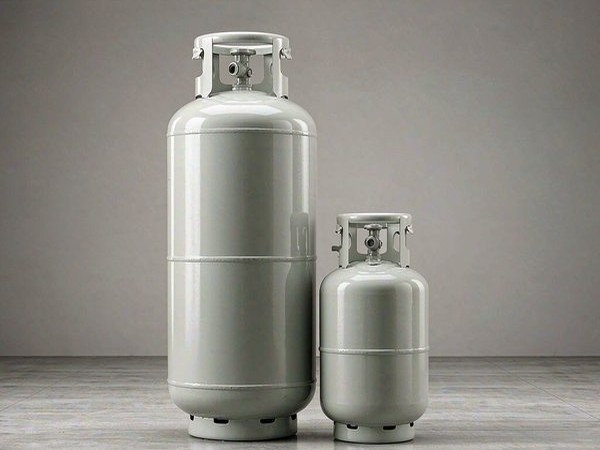
The 20 lb cylinder — the familiar BBQ-size bottle — holds about 20 pounds of LPG when full. In practical terms, a single 20 lb cylinder provides roughly 4 to 6 hours of cooking on a typical commercial grill, depending on burner settings and equipment efficiency. For a small café, a food truck or a single outdoor heater, that may be perfectly adequate.
The 100 lb cylinder holds about five times as much. It is the standard choice for high-draw applications: large grills, industrial heaters, dryers, forklifts, site offices and catering operations that cannot afford to run dry mid-service.
A useful rule of thumb: calculate your peak-hour consumption, then multiply by the longest stretch you need to operate without a swap. If the answer exceeds one 20 lb bottle with any safety margin, you are in 100 lb territory.
But consumption is only half the calculation. Storage space, delivery access and local rules frequently decide the outcome.
The Hidden Costs of Going Small
At first glance, 20 lb cylinders look cheaper. The unit price is lower, they are easy to move, and almost any supplier can deliver them. The cost problem shows up later.
Frequent swaps mean more deliveries. More deliveries mean more driver time, more fuel and more admin. If a site uses six 20 lb cylinders a week, that is six handling cycles, six potential leaks at connection points and six chances for a cylinder to be returned late or not at all.
There is also the deposit trap. Many distributors charge a deposit per cylinder. A site running a rotating pool of twenty 20 lb bottles has twenty deposits outstanding. Move to four 100 lb cylinders and the same gas volume may require far less tied-up capital.
For multi-site operators, the administrative burden multiplies. Tracking ten small cylinders across three locations is materially harder than tracking two large ones.
Where the 100 lb Cylinder Wins
The 100 lb class earns its keep in four situations:
- High continuous draw. Equipment that runs for hours at a time benefits from fewer connection changes and more stable pressure.
- Remote or difficult-access sites. If a delivery is expensive, you want each delivery to last. A larger cylinder reduces visit frequency.
- Cold-weather operation. Propane pressure drops as temperature falls. A larger cylinder with more liquid volume handles high demand in cold conditions better than a small one that cools rapidly during withdrawal.
- Professional operations with trained staff. A 100 lb cylinder is heavy — often around 70 pounds empty. It should be moved by people who are trained and equipped to do so.
Where 20 lb Still Makes More Sense
Do not oversize just because you can. The 20 lb cylinder remains the right answer in several cases:
- Small outlets with limited storage space.
- Customers who move cylinders frequently or operate in tight urban premises.
- Applications where a single cylinder must be carried by one person.
- Seasonal or occasional use, where a large cylinder would sit idle for months.
- Markets with strict limits on the quantity of LPG that can be stored on commercial premises.
In many mixed-use sites, the optimal answer is not one or the other. It is a combination: a 100 lb cylinder as the primary supply and a 20 lb as a backup for peak periods or emergency use.
Space, Access and Code Requirements
Before ordering, walk the site. Where will the cylinders sit? Is there a ventilated, Level ground area away from ignition sources? Can a delivery vehicle reach it without blocking traffic or requiring a long carry?
Local codes often specify minimum clearances from buildings, windows, air intakes and combustible materials. They may also limit the number or total water capacity of cylinders allowed in a given location. These rules vary significantly between countries and even between municipalities, so confirm them before committing to a format.
A common mistake is choosing cylinders first and discovering later that the site cannot legally store them. That discovery is expensive because it usually means redesigning the supply setup after equipment is already installed.
Handling and Safety Realities
A full 100 lb cylinder is a serious object. It should never be dragged, dropped or rolled down a step. Use a proper cylinder cart, secure it upright during transport, and store it upright in use. Valve protection matters — a damaged valve on a large cylinder can release a significant amount of gas quickly.
For 20 lb cylinders, the main risks are complacency and improper connection. Because people handle them casually, they skip leak checks and cross-thread fittings. Train staff to check connections every time, regardless of cylinder size.
In both cases, cylinders must be certified for the market in which they are used. A bottle that is perfectly legal in one country may not be accepted in another. Verify approvals rather than assuming interchangeability.
The Total Cost Framework
When comparing formats, look beyond purchase price. Build a simple model with five inputs:
- Cylinder purchase or deposit cost.
- Delivery cost per refill.
- Expected refill frequency.
- Handling labour at the site.
- Loss, damage and replacement rate.
A 100 lb cylinder usually wins on items 2, 3 and 5, while a 20 lb wins on item 1 and sometimes item 4. The overall result depends on your specific operating pattern — which is why generic advice is rarely useful.
For high-volume sites, the savings from fewer deliveries often dominate. For low-volume sites, the lower upfront cost of small cylinders wins. The breakeven point is usually found by calculating how many 20 lb cylinders you would need to equal the gas in one 100 lb unit, then comparing delivery and deposit costs for both scenarios.
What Buyers Should Ask Suppliers
A good supplier should help you model this rather than simply push one format. Useful questions include:
- What is the empty weight and water capacity of each cylinder?
- Which certifications apply in our market?
- Do you offer both formats with compatible valves and regulators?
- What is the refill turnaround time for each size?
- Can you support a mixed supply setup at multiple sites?
The answers reveal whether the supplier understands commercial operations or just moves bottles.
Quick Takeaways
- Choose cylinder size based on peak demand, delivery frequency and site constraints.
- 20 lb cylinders win on flexibility and low upfront cost.
- 100 lb cylinders win on delivery economics, cold weather and high draw.
- Deposits, handling labour and loss rates often matter more than unit price.
- Mixed setups are common and often optimal for professional sites.
Frequently Asked Questions
How long does a 100 lb cylinder last compared with a 20 lb one?
Roughly five times longer under the same load, though actual duration depends on equipment efficiency and operating conditions.
Can I use the same regulator for both sizes?
Only if the regulator is rated for the required flow and pressure and is compatible with the valve. Check with a qualified supplier.
Are 100 lb cylinders allowed in all commercial premises?
No. Local fire and building codes may restrict quantity and location. Always verify before installation.
Which format is better for catering?
Most professional caterers use 100 lb cylinders for primary cooking and keep a 20 lb as a reserve.
The bottom line: there is no universally better cylinder. There is only the format that fits your demand profile, your site and your delivery economics. Work those out first, and the choice becomes obvious.