
When most people think of the energy transition, they picture wind turbines, solar panels, battery storage, and electric vehicles. But for the 2.4 billion people worldwide who still cook with solid fuels — wood, charcoal, crop residues, and animal dung — the most immediate, achievable, and life-changing energy upgrade is not a battery. It is a refillable LPG cylinder. Qingdao Evergreen Import and Export Co., Ltd. is proud to be part of this quiet revolution, supplying the physical hardware — the steel bottles and brass valves — that makes clean cooking accessible to households around the world.
The health case is overwhelming. According to the World Health Organization, cooking with solid fuels indoors exposes women and children to levels of fine particulate matter (PM2.5) that exceed WHO safe limits by 100 times or more. The result is pneumonia in children, chronic obstructive pulmonary disease in adults, lung cancer, low birth weight, and eye damage — killing an estimated 3.8 million people annually, more than malaria and HIV combined. LPG combustion, by contrast, produces almost no particulate matter when burned in a properly adjusted stove, and the exhaust is dramatically less toxic. Switching a household from wood to LPG reduces kitchen PM2.5 levels by over 90 percent.
The climate case is also compelling. While LPG is a fossil fuel, its carbon intensity per useful unit of cooking energy is roughly half that of wood burned inefficiently on an open fire, and far less than charcoal, which involves massive deforestation and production losses along the supply chain. When LPG replaces kerosene — common in urban African and Asian households — the reduction in black carbon (a short-lived climate pollutant with 4,700 times the warming power of CO2 over a 20-year period) is especially significant. The UN Environment Programme identifies LPG as a key intervention for near-term climate mitigation through black carbon reduction.
This is why LPG is increasingly described as a “transition fuel” — a bridge between the biomass cooking of the past and the all-electric or hydrogen cooking of the future. The UN’s Sustainable Development Goal 7 (Affordable and Clean Energy) explicitly recognizes LPG as a critical enabler of clean cooking access, and major development banks including the World Bank, African Development Bank, and Asian Development Bank are funding LPG scale-up programs across Africa and Asia. The Global Alliance for Clean Cookstoves now counts LPG as one of its primary intervention fuels.
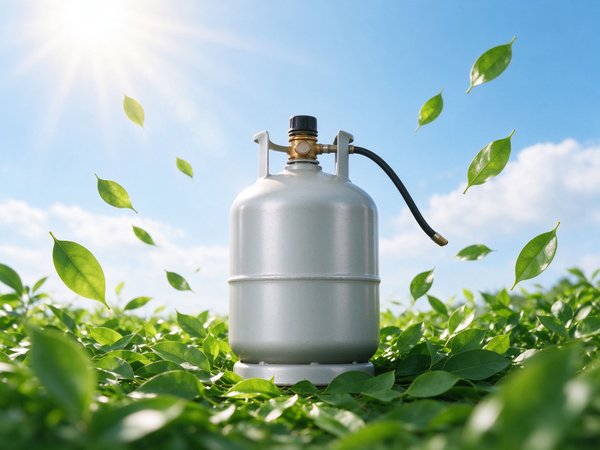
At the heart of this transition is the refillable cylinder. Unlike single-use canisters, a properly built steel LPG cylinder has a service life of 15 to 20 years, refilled thousands of times. The steel is infinitely recyclable at end of life — the scrap value of the steel shell often covers the cost of remanufacturing. Every time a cylinder is reused, the embodied carbon in the steel manufacturing is spread across hundreds of refills, making the per-cooking-session carbon footprint of a refillable cylinder exceptionally low. This is the essence of cylinder refill reuse — a circular economy model that the gas industry has been perfecting for over a century.
Qingdao Evergreen’s product range is built explicitly for this refill-and-reuse model. The cylinders are designed and tested for the repeated pressure cycling that comes with weekly or monthly refilling. The steel grade is chosen for fatigue resistance — not just burst strength on day one, but the ability to withstand thousands of pressure cycles over two decades. The welds are radiographically inspected on every single cylinder, and the hydrostatic test margin (test pressure versus working pressure) provides a safety buffer for the entire service life. The base and guard are reinforced to survive the repeated drop-and-bump reality of cylinder exchange.
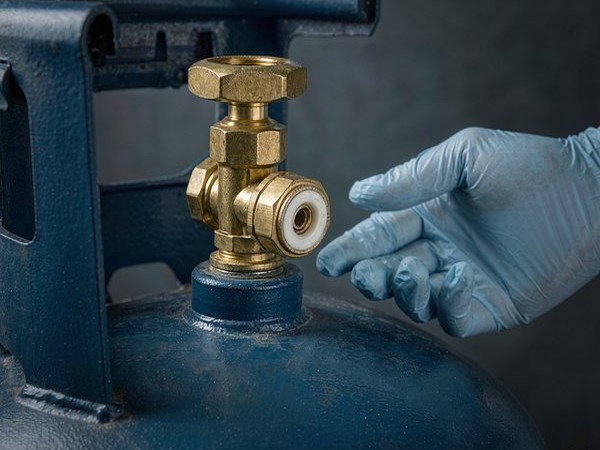
The company’s valve technology also supports long-cycle reuse. The YSF-RA-1, YSF-7B, and YSF-13 valves are serviceable — they can be rebuilt with new seals, O-rings, and handwheels at the 10-year requalification mark rather than discarded. This extends the system life and reduces waste. Evergreen supplies valve rebuild kits and spare parts to cylinder refurbishment shops in every market it serves, helping the circular economy function at the local level.
The low carbon fuel advantage extends beyond cooking. LPG is increasingly used as a cleaner alternative for fleet vehicles — LPG-powered taxis, buses, and forklifts produce fewer NOx and particulate emissions than diesel. It is used in agricultural drying — replacing heavy fuel oil in crop, coffee, and tobacco drying operations. It serves as backup power generation — lower-emission standby generators for hospitals, data centers, and telecom towers. It is used in marine and boating — LPG cooking and heating on leisure craft where charcoal is banned for fire safety reasons.
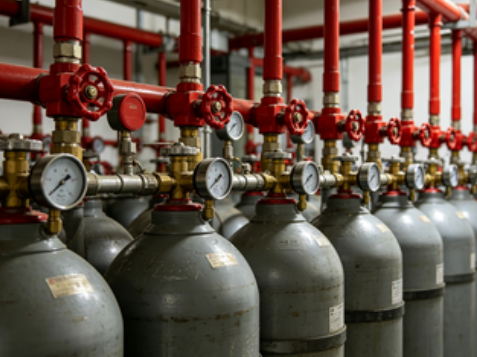
For each of these applications, a reliable, certified cylinder supply chain is essential. Qingdao Evergreen’s range covers the small 2kg cylinders for single-burner stoves all the way up to the 108L and 118L cylinders for manifolded industrial supply. The company also supplies the 45kg commercial cylinders that power restaurants and laundries in every market it serves.
What the next decade holds is a massive scale-up. The Global Alliance for Clean Cookstoves aims to achieve universal clean cooking access by 2030, requiring hundreds of millions of new cylinders and a global refill infrastructure. National programs in Nigeria, Indonesia, Egypt, Kenya, and Bangladesh are already driving demand. The IEA’s Net Zero by 2050 scenario explicitly includes LPG as a transition fuel providing clean cooking access to hundreds of millions through 2030.
For Qingdao Evergreen, this is both a business opportunity and a responsibility. The company’s export team works with development organizations, government programs, and private gas distributors to ensure that the cylinders reaching end users are safe, certified, and built to last. Every container shipped is not just a commercial transaction — it is a contribution to a global public health and environmental goal. The transition to clean energy will not happen overnight, and it will not be powered by solar panels alone. The humble steel cylinder, filled with clean-burning LPG, is already changing lives in kitchens across Africa, Asia, Latin America, and the Middle East. Qingdao Evergreen is proud to build the hardware that makes that change possible.