
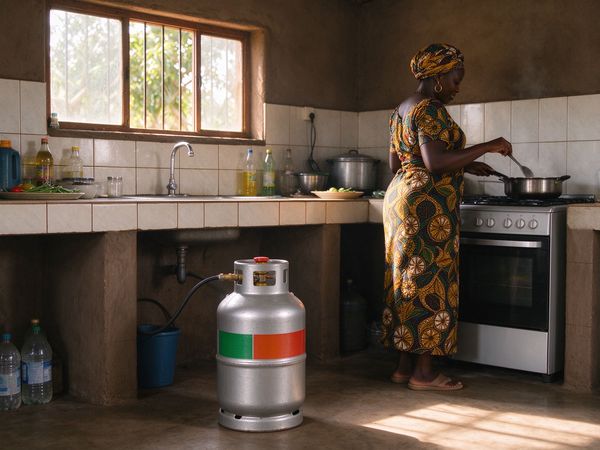
Across Africa, a quiet revolution is taking place in kitchens. For generations, billions of meals have been cooked over open fires, charcoal braziers, and kerosene stoves — fuel sources that kill an estimated 3.7 million people annually from indoor air pollution, according to the World Health Organization. Women and children, who bear primary responsibility for cooking, spend hours each day gathering firewood, exposing themselves to attack, back injury, and respiratory disease. Governments from Lagos to Harare are now pushing hard to transition households to LPG, and the demand for affordable, certified cooking gas cylinders has exploded. Qingdao Evergreen Import and Export Co., Ltd. has emerged as a key supply partner for this transformation.
Nigeria, Africa’s most populous nation with over 220 million people, is ground zero. The Nigeria LPG market is the fastest-growing in sub-Saharan Africa. The Nigerian National Petroleum Company (NNPC) and the National Gas Expansion Programme have set a target to lift LPG penetration from roughly 5 percent of households to over 30 percent by the end of the decade. To import cylinders into Nigeria, every shipment must clear SONCAP certification — the Standards Organisation of Nigeria Conformity Assessment Programme — which verifies that products meet Nigerian Industrial Standard NIS 328 for LPG cylinders. Qingdao Evergreen has completed the SONCAP process for its cylinder range and ships regularly to Lagos, Port Harcourt, Abuja, and Kano, handling all pre-shipment inspection, Form M registration support, and documentation.
The Nigerian market favors two dominant cylinder sizes: the 6kg cylinder — popular for urban household cooking in Lagos and Abuja — and the 12.5kg cylinder, the workhorse for family kitchens, small restaurants, and street food vendors. Evergreen’s 12.5kg range (HR40011, HR40012, HR40012-1) is built to YEM151/2000, EN13322-1, and local African standard 339/1/2003, with working pressures between 1.7 and 2.26 MPa. These cylinders feature water capacities of 26.2 to 26.5L, empty weights of 14.9 to 16.5kg, and heights ranging from 543mm to 590mm. They ship with YEMEN-4, YSF-9-0, or YSF-19 valves depending on the specific destination-country connection standard. The 6kg size (HR40021, 12.9L water capacity) is also available for customers who want a lighter, more affordable entry-level cylinder.
Further south, Zimbabwe is another growth market. As electricity reliability remains a challenge — with frequent load-shedding of 8 to 12 hours per day — and urban households seek affordable backup cooking fuel, demand for 6kg and 12kg cylinders has climbed steadily. Qingdao Evergreen recently completed a quotation and shipment cycle for a Zimbabwean customer, supplying cylinders sized for the local market and coordinating freight from Qingdao to Durban or Beira for onward road transport to Harare. The company’s export team handles all logistics, including container loading optimization (cylinders are shipped standing, on pallets, with proper bracing), HS code classification under 7311.00, and commercial invoice preparation.
Beyond Nigeria and Zimbabwe, Evergreen supplies cylinders to Kenya, Ghana, Côte d’Ivoire, Tanzania, Zambia, South Africa, and Uganda. The 9kg cylinder (HR40039, HR40040, HR40041) — built to EN1442 or AS2469 standards — is a versatile size that works across multiple African markets. The 5kg (HR40007) and 3kg (HR40006) cylinders are popular for small households, mobile food vendors, and single-person households in dense urban areas like Nairobi and Accra. The 45kg industrial cylinder (HR40048) serves restaurants, bakeries, and commercial laundries across the continent.
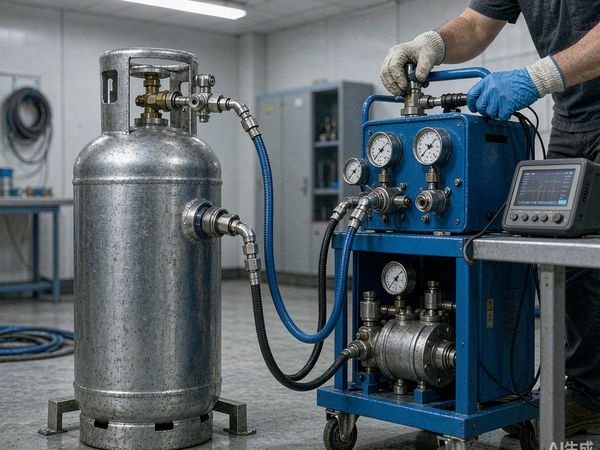
What African distributors value most is not just price — it is reliability and compliance. A cylinder that fails inspection at the port is a cargo claim, a demurrage bill, and a delayed fuel supply to customers. Qingdao Evergreen’s pre-shipment process includes: material mill certificates for the steel coil, welding procedure qualification records, hydrostatic test reports, radiographic inspection of longitudinal and circumferential welds, and a final visual and paint inspection. Every batch is traceable by heat number and manufacturing date, so any quality issue can be traced back to the exact production run.
The company also understands the commercial realities of African markets. It offers competitive MOQs for first-time buyers — starting from a single 20-foot container — flexible payment terms supported by Chinese export credit insurance (SINOSURE), and private-label branding options that help local gas companies build their own brand identity on the cylinders. Custom color painting — green, red, blue, or the customer’s specific corporate color — is available at volume. The company also supplies valve caps, tamper seals, and cylinder neck labels to support local regulatory requirements.
The environmental and public health stakes are enormous. Every household that switches from charcoal or firewood to LPG reduces black carbon emissions, cuts indoor air pollution dramatically, and saves women and children hours of daily wood collection. The World Bank estimates that expanding LPG access in sub-Saharan Africa could prevent over a million premature deaths annually. By supplying certified, affordable cylinders, Qingdao Evergreen is not just selling steel — it is participating in a public-health transformation that touches millions of lives.
As African governments scale up their clean-cooking subsidies and private gas distributors expand their refill networks, the next decade will see an unprecedented wave of cylinder demand. The IEA estimates that Africa needs over 200 million new cylinders by 2030 to meet clean-cooking targets. Qingdao Evergreen is building the production, certification, and logistics partnerships to meet that wave — one container at a time, one household at a time.